Skip to content
Defining Dyslexia

SENCo & teacher resources

The reading and tools worth your time, organised by scenario

There is a lot on this site. This page curates the Knowledge Centre articles and free reflection tools that school staff reach for most, grouped by the situations they come up in, classroom teaching, transitions, exams, families, and the moments when you're simply not sure.

Free professional resource

Provision Grid for Dyslexia and SpLD

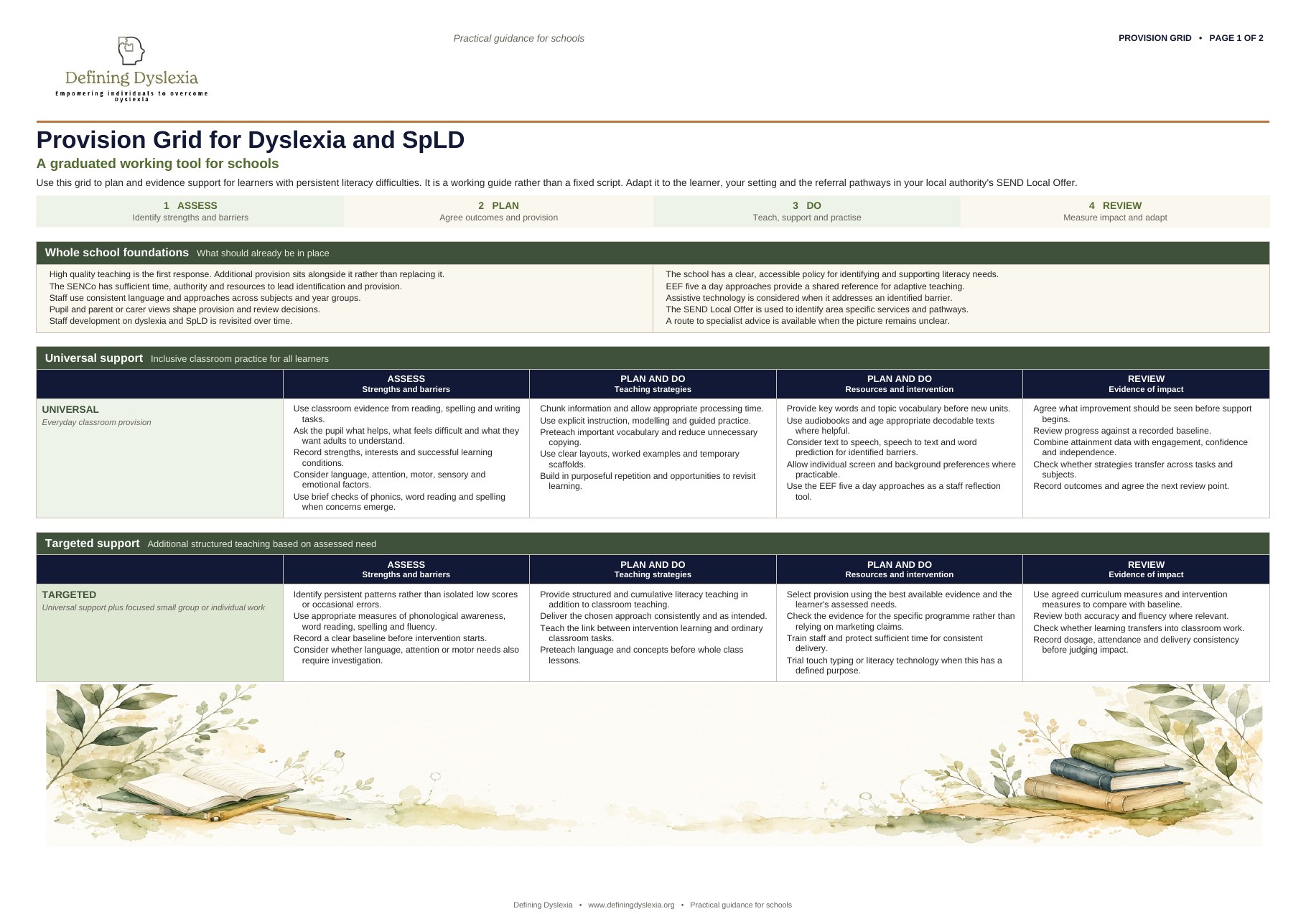
The graduated approach for dyslexia on two pages, from everyday classroom practice through to specialist assessment.

Effective dyslexia support begins with high-quality teaching and develops through a graduated response. This provision grid helps schools consider what is already in place, identify appropriate next steps and review whether support is making a meaningful difference.

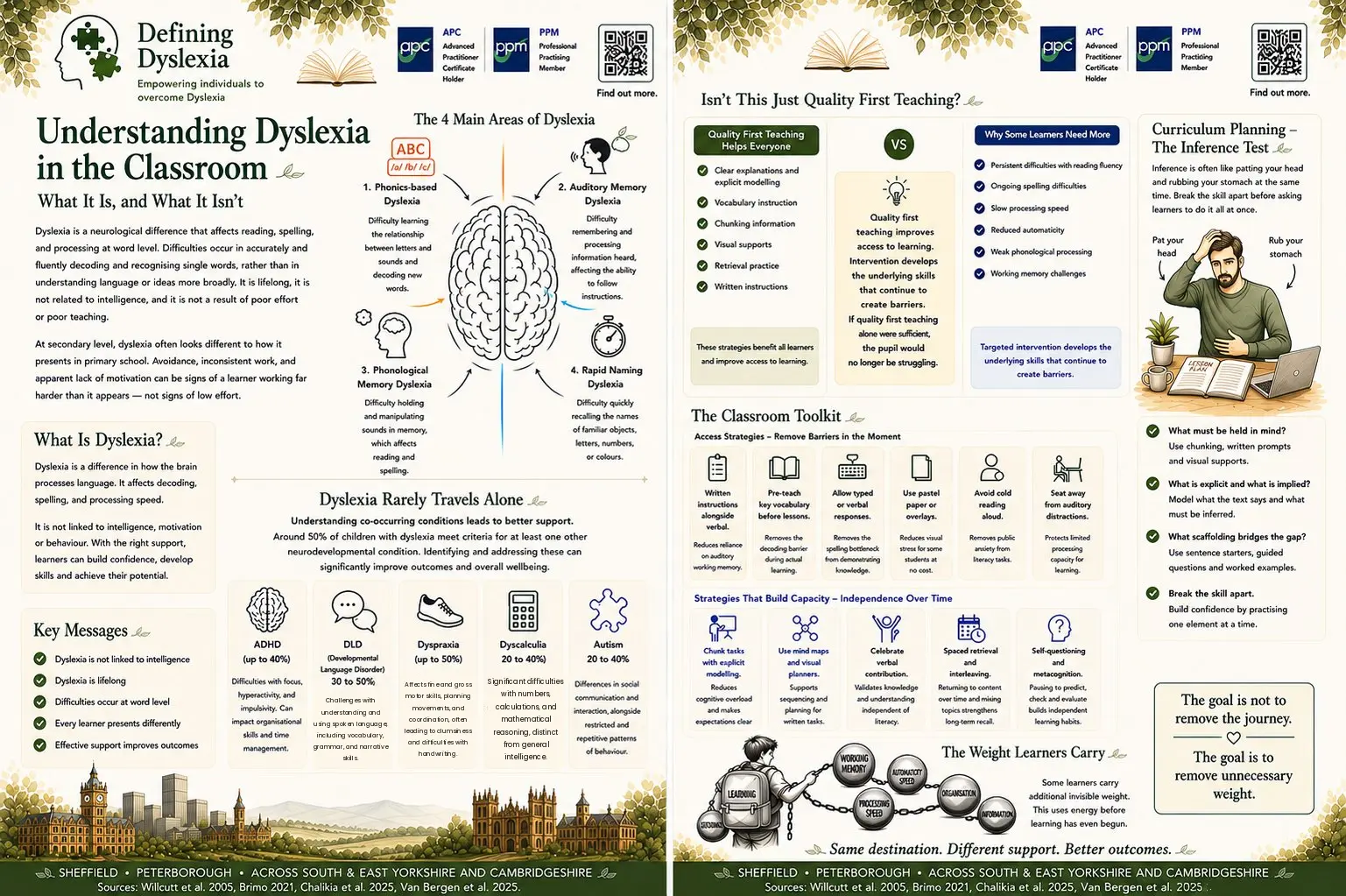
Preview of the Defining Dyslexia Provision Grid for Dyslexia and SpLD

Defining Dyslexia resource · PDF · 2 pages · A3 landscape

Provision Grid for Dyslexia and SpLD

A graduated working tool for schools

A practical two-page resource to help schools assess needs, plan support, implement appropriate provision and review its impact. It covers universal, targeted and personalised support, alongside specialist assessment and trusted sources of guidance.

It sets out a graduated approach for dyslexia across universal, targeted and personalised support, with prompts for Assess, Plan, Do and Review, so that dyslexia interventions for schools can be chosen for a clear purpose and evaluated honestly.

This is a practical guidance resource. It does not replace individual assessment, professional advice or your local authority's SEND pathways.

Before you dive in

How to use this page

Curated, not comprehensive

Each section below picks the two or three pieces that answer the scenario best. The full Knowledge Centre and free resources library are always linked if you want more.

Free to use and share

Every tool linked here is free, needs no sign-up, and most can be printed or saved as a PDF. Share them with colleagues and families freely.

Reflection, not diagnosis

Indicators and checklists organise what you are seeing. They do not screen, diagnose or replace professional judgement, yours or ours.

Scenario 01

Reading, writing and spelling in the classroom

The daily mechanics. Why reading aloud is so hard, how to make homework survivable, and the working-memory load sitting underneath written work.

Scenario 02

The pupil behind the behaviour

Refusal, avoidance and 'bad behaviour' are often the visible tip of something else. These pieces help staff read what might be underneath.

Scenario 03

Seeing it from the pupil's chair

First-person accounts of school with dyslexia, useful CPD reading and a good starting point for staff discussion.

Scenario 04

Transitions: primary to secondary, and on to university

The points where support most often drops. What to pass on, what to ask the receiving setting, and what changes at each stage.

Scenario 05

Exams and access arrangements

What a diagnosis does and does not mean for exam arrangements, what evidence carries weight, and where the decision actually sits.

Scenario 06

Working with families

The conversations that go better with preparation, before an assessment, after a report arrives, and when a screener says 'fine' but nobody is convinced.

Scenario 07

When you're not sure it's dyslexia

Not every difficulty is dyslexia, and an honest assessment sometimes says so. These pieces cover the uncertainty well.

Dyslexia assessments

Can Dyslexia Be Mild?

It is a question that comes up often, particularly from parents whose child is managing in school but clearly finding things harder than they should. Can dyslexia be mild? And if it can,…

Read the article

More

Everything else, in two places

If a scenario isn't covered above, the two libraries below hold everything. All of it free to read and share.

Elsewhere

More resources for education professionals

Mark has also created a wider collection of practical SEND materials for SENCOs, teachers, governors and school leaders. Resources cover areas including reasonable adjustments, Assess, Plan, Do, Review, access arrangements and staff development.

External TES resource shop. Free and paid resources are available.