Diagnostic dyslexia assessment · UK-wide
Dyslexia assessments that give you a clear answer.
Full diagnostic assessments for children, adults and university students, face-to-face across our local service areas, including South Yorkshire, Wakefield, Peterborough, Stamford, Rutland, Grantham and South Lincolnshire, or remotely anywhere in the UK. Every assessment is carried out personally by Mark, a PATOSS-registered specialist assessor.
Free 15-minute telephone call · no obligation · you speak to your assessor
- PATOSS-registered, APC-holding assessor
- Transparent, published pricing
- Face-to-face or remote
Not sure yet? · Free · 3–5 minutes
Explore the signs you are noticing with our free dyslexia indicator checks.
No diagnosis and no commitment, just a clearer picture.
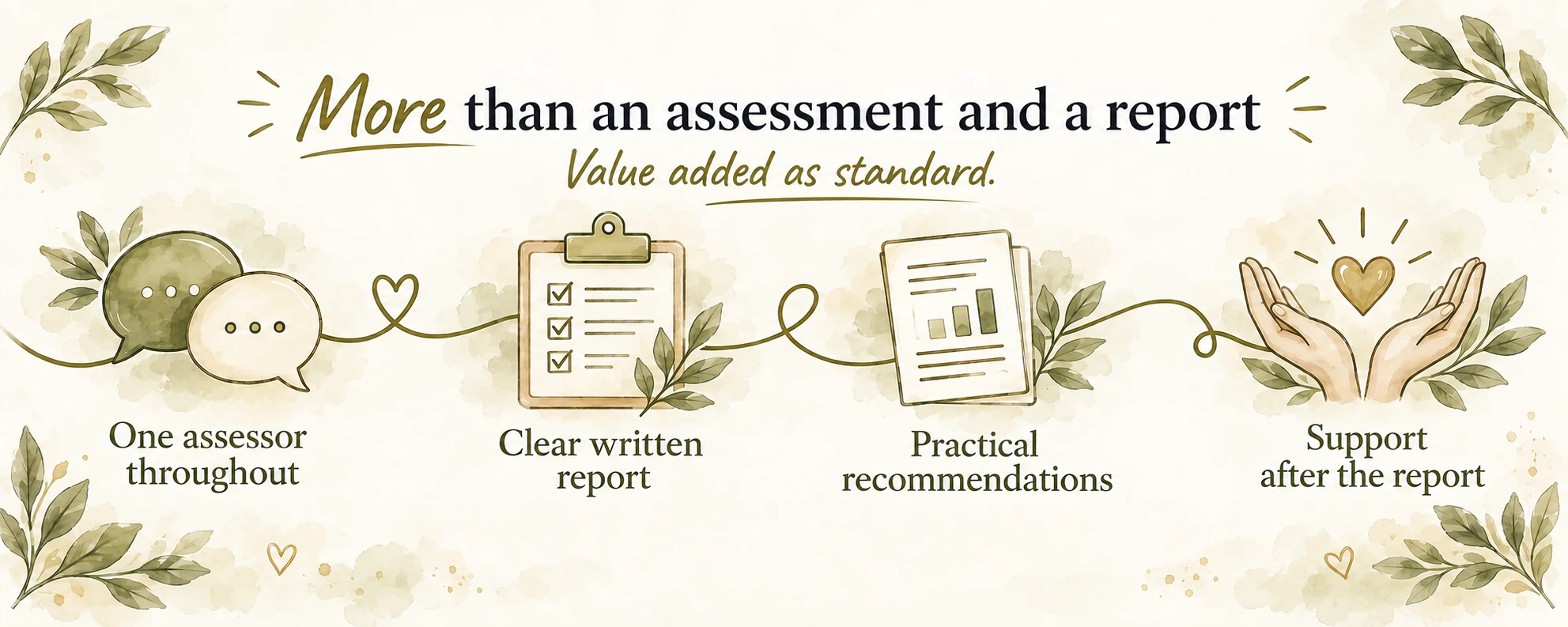
More than an assessment and a report
Value added as standard.

One assessor throughout

Clear written report

Practical recommendations

Support after the report


Face-to-face that comes to you
At home, at your child’s school where the school agrees, at another suitable agreed setting, or remotely. There is no assessment centre to travel to. Within the face-to-face areas, your assessor travels to you.
Understanding dyslexia
What is dyslexia?
Dyslexia is a specific learning difference, one of a group of profiles known as specific learning difficulties, or SpLDs. It mainly affects the skills involved in accurate and fluent reading and spelling, and it often comes with slower processing of written information and a working memory that fills up quickly.
It is lifelong, it is common, and it says nothing about intelligence. Plenty of dyslexic children and adults are bright, articulate and capable, and have been quietly compensating for years, which is exactly why dyslexia is so often identified late.
Because it is a profile rather than a single symptom, no two people experience it the same way. No single sign must be present in the same way for every dyslexic person. A diagnostic assessment is simply a structured way of finding out what that individual profile actually looks like.
Reading and spelling
Reading may be accurate but slow and effortful, or quicker but less accurate. Spelling may be inconsistent or require more conscious effort, although some people develop accurate spelling through teaching, practice and effective compensatory strategies.
Processing and memory
Written information can take longer to take in, and multi-step instructions are genuinely hard to hold on to.
A gap between knowing and showing
Someone can explain an idea clearly out loud and still find that the written version does not reflect what they know.
Rarely on its own
Dyslexia frequently co-occurs with other profiles, including ADHD and dyspraxia. An assessment looks at the whole picture.
Help for your situation
What brings you here?
Start from your situation rather than the service list. Each route leads to guidance already written for that stage.
My child is struggling
Explore the signs you are noticing, what school may be seeing and when an assessment could be helpful.
Bright child struggling to readMy child is approaching secondary school
Understand what may be worth exploring before the demands of secondary education increase.
Preparing for secondary schoolI am wondering about dyslexia as an adult
Explore adult dyslexia, workplace difficulties and whether assessment could provide useful answers.
Adult dyslexia assessmentI need evidence or adjustments
Find out what may be required for examinations, university, work, professional qualifications, benefits or a driving theory test.
Evidence and adjustmentsI already have a report
Check whether your existing evidence may still be suitable before paying for another assessment.
Do I need a new assessment?I represent a school or professional service
Find assessment, access-arrangements, training, referral and professional collaboration information.
Schools and professionalsWho it's for
Dyslexia assessments shaped to the person, not the paperwork.
Many people search for a “dyslexia test” when what they need is a full diagnostic assessment. A full assessment goes significantly beyond a screener or a test, providing a comprehensive profile and a detailed written report with practical recommendations.

Children
A thorough, evidence-based assessment identifying your child's learning profile, strengths and difficulties, with practical recommendations for home and school.
For parentsAdults
It is never too late for answers. A clear learning profile, workplace guidance and a better understanding of your individual strengths and difficulties.
For adultsUniversity students
Preparing a DSA application or evidence for exam arrangements? A diagnostic assessment supports conversations about appropriate adjustments and support.
For studentsRemote assessments
Can't travel, or prefer to assess from home? Full diagnostic assessments are available remotely across the UK, with no compromise on quality or rigour.
Remote & onlineSupport for schools
Access arrangement testing, SENCo cover and staff training on JCQ Form 8 and identifying SpLD. Practical support that fits around your school's needs.
For schoolsCPD & training
Specialist CPD for teachers and SENCos on identifying and supporting dyslexia and other SpLDs. Delivered in-house or remotely, tailored to your setting.
Enquire about CPDStep by step
Your assessment journey
From the first conversation through to your report and follow-up support, each stage is explained clearly. You will deal directly with the same assessor throughout.
- Initial conversation: discuss your concerns with no obligation.
- Choose and book: agree the right service, appointment and assessment method.
- Background information: complete the relevant forms and share any useful information.
- The assessment: a supportive one-to-one session, usually lasting two to three hours.
- Scoring and analysis: results and background information are considered together.
- Feedback and written report: the findings are explained clearly and followed by a comprehensive report.
- Support and next steps: practical recommendations and reasonable follow-up support.

What you receive
A clear report with practical next steps.
Every full diagnostic assessment concludes with a detailed written report, a clear learning profile, the reasoning behind any diagnosis, and practical recommendations for home, school, university or the workplace. We talk it through together afterwards, so nothing is left unclear.
See what's inside a reportIncluded as standard
Every assessment includes
A full diagnostic assessment with Defining Dyslexia gives you a complete picture, not just a label, but a practical path forward.
After the assessment
Support that continues after your assessment
A diagnostic assessment should provide more than a report. You will receive a clear explanation of the findings and practical recommendations that can be used at home, in education or in the workplace.
You can also get in touch with questions after receiving the report. Where further help is needed, support can include a follow-up discussion, guidance before a school meeting and specialist teaching or study-skills support.
One assessor throughout
You will deal directly with the same assessor from your initial enquiry through to the assessment, feedback and any agreed follow-up support.
Help beyond the report
Your assessor can help you understand the findings, consider the next steps and prepare for discussions with schools, colleges or other professionals.
Continuity into specialist support
Where appropriate and subject to availability, specialist or study-skills support can also be provided. This means support can be informed directly by the assessment findings.
Feedback and reasonable questions about your report are part of the assessment service. More substantial follow-up work, specialist teaching and attendance at meetings are separate services, always discussed and agreed before anything is confirmed.
A first step
Do any of these sound familiar?
If several resonate, an assessment can bring clarity, for you, or for someone you care about. Our free indicator checks take three to five minutes and carry no commitment.
Book a free 15-minute telephone call- Reading feels slow or tiring, even with practice
- Spelling stays inconsistent year after year
- Bright and hardworking, but held back in writing
- You've suspected it for years but never had confirmation
Transparent pricing
Assessment pricing: clear and agreed before we begin.
Full diagnostic assessment
Children, adults and students
£495
- Comprehensive written report
- Practical recommendations
- Feedback conversation included
Flexible ways to pay
Choose what suits you
- Credit & debit card
- Bank transfer
- PayPal
- Instalment options
Schools & settings
Quoted to your needs
- Access arrangement testing
- SENCo cover
- JCQ Form 8 & SpLD training
Full fees and payment options are published in full. View our prices →
The wider work
More than a dyslexia assessment.
Diagnostic assessment sits at the heart of Defining Dyslexia, but it is not all we do. Your assessor is a qualified teacher and former SENCo as well as an APC-holding specialist assessor, so support can continue well beyond the report itself, for families, schools, colleges and other professionals.
Dyslexia & SpLD screening
A shorter screener looking at literacy abilities and cognitive profile, with clear recommendations and an indication of whether dyslexia or another learning difficulty is likely. Not a formal diagnostic assessment.
Children aged 8+ and adults
Access arrangements testing
Access arrangements assessment and support for schools and colleges, with appropriate testing, evidence and documentation to support the centre's access arrangements process. The school, college or examination centre makes the final decision. This decision is based on the applicable regulations, available evidence and the student's normal way of working. A dyslexia diagnosis does not automatically guarantee an access arrangement.
Schools and colleges
SEND training & CPD
Training and staff development covering dyslexia, ADHD, ASD, managing behaviours and the effective use of teaching assistants, tailored to your setting's own priorities, in-house or remotely.
Schools and education settings
SEN consultancy & SENCo support
Guidance on special educational needs provision, including SEND processes, school support reviews and strategic planning for inclusion, drawing on experience as a qualified teacher and former SENCo.
Schools, settings and parents
Specialist teacher support
One-to-one specialist teaching shaped around an individual learning profile. Sessions draw directly on assessment findings, so time is spent on the areas that will make the greatest difference.
Children, young people and adults
Parental advocacy & SEND support
Practical help understanding the support your child receives at school (from reasonable adjustments to attending meetings with the setting) so families can navigate the system with someone alongside them.
Parents and families
The wider picture
A personal approach to finding the right support
The aim is not to fit everyone into the same assessment pathway. Mark will listen to your concerns and help you consider what would genuinely be most useful.
If your needs extend beyond dyslexia, he can provide a personal introduction to a trusted neuroaffirming diagnostic provider, with your permission.
The priority is helping you reach the right support—not simply a service. You are not left to navigate the next stage alone.

For schools & referrers
A straightforward referral process.
Whether you are a SENCo, teacher, employer or another professional, there is no formal referral paperwork. An initial conversation is enough to explore whether an assessment is appropriate or whether another service may be more helpful. Reports are written so settings can put them straight to use, and information is only shared onward with the appropriate consent.

About your assessor
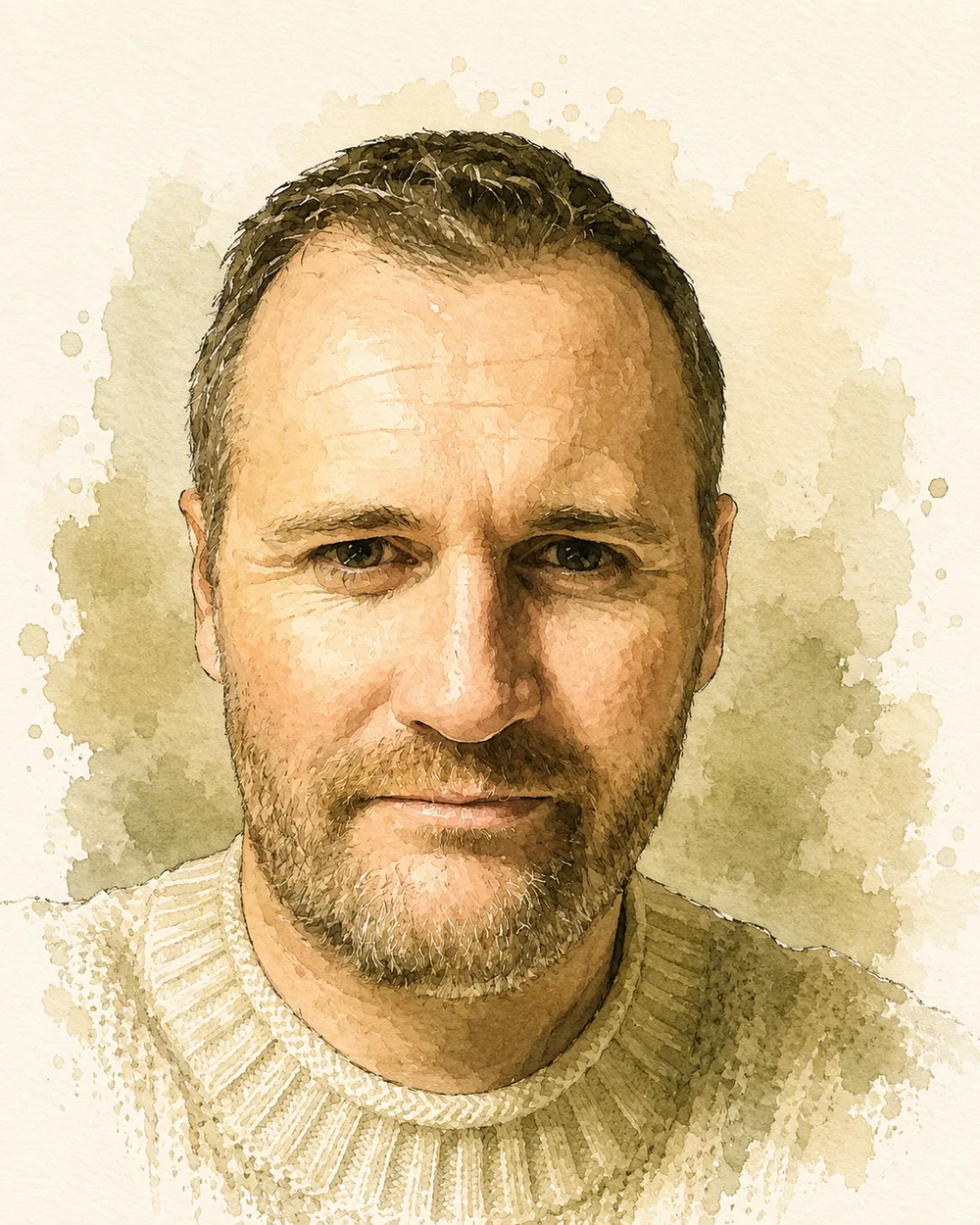
Mark Wilson
Every Defining Dyslexia assessment is carried out by Mark, a PATOSS-registered specialist assessor with fifteen years of experience supporting children, young people and adults with dyslexia and other learning differences. He holds an Assessment Practising Certificate (APC) and works to the standards set by SASC.
He is also a qualified teacher and former SENCo, so your assessment is about more than identifying dyslexia. It is about turning the findings into practical next steps for school, university, work or everyday life.
In their words
The relief of finally knowing.
“The dyslexia services and support provided by Mark are truly exceptional. He is knowledgeable, supportive, and tailors his approach to individual needs.”
“Although my child did not get an SpLD diagnosis, Mark's analysis supported Oscar to grow in confidence and independence. The support for school and us as parents was exceptional.”
“Mark supported us with Access Arrangements. His knowledge and friendly approach supported both students and staff. His reasonable fees were also a deciding factor.”
The Knowledge Centre
Plain, jargon-light answers to the questions dyslexia raises.
Articles on assessments, SpLD support and navigating the school system, gathered in one place, with new pieces added often.
Bright child but struggling to read?
The difference between a phase and a pattern, and the signs that are worth a closer look.
Read guide The assessmentWhat does a dyslexia assessment report actually look like?
A plain-language walkthrough of what's inside the report and how it's used.
Read guide CostsHow much does a dyslexia assessment cost?
Clearly published fees, what's included, and the flexible ways you can pay.
Read guideReady to take the next step?
Tell us a little about the situation and we will respond within one working day. No pressure, no jargon, just a calm first conversation.