Are There Different Types of Dyslexia?
Many people search for “types of dyslexia”, expecting there to be several distinct diagnoses. Whilst these terms are still widely used online, current understanding suggests that…
By Mark, specialist dyslexia assessor
Many people search for “types of dyslexia”, expecting there to be several distinct diagnoses. Whilst these terms are still widely used online, current understanding suggests that dyslexia is better viewed as a spectrum of strengths and difficulties. Every individual has a unique profile rather than fitting neatly into one category.
Here in the UK, we tend to think about dyslexia rather differently.
So why do people still talk about different “types” of dyslexia?
If you’ve been researching dyslexia online, you’ve probably come across terms such as _phonological dyslexia_, _surface dyslexia_ or even _visual dyslexia_. It can make it sound as though there are several completely different conditions, each with its own diagnosis.
In reality, it isn’t quite that simple.
These terms were originally developed to describe patterns of strengths and difficulties that researchers and clinicians observed. Whilst they can still be useful for explaining why one person experiences dyslexia differently from another, they are not usually treated as separate diagnoses.
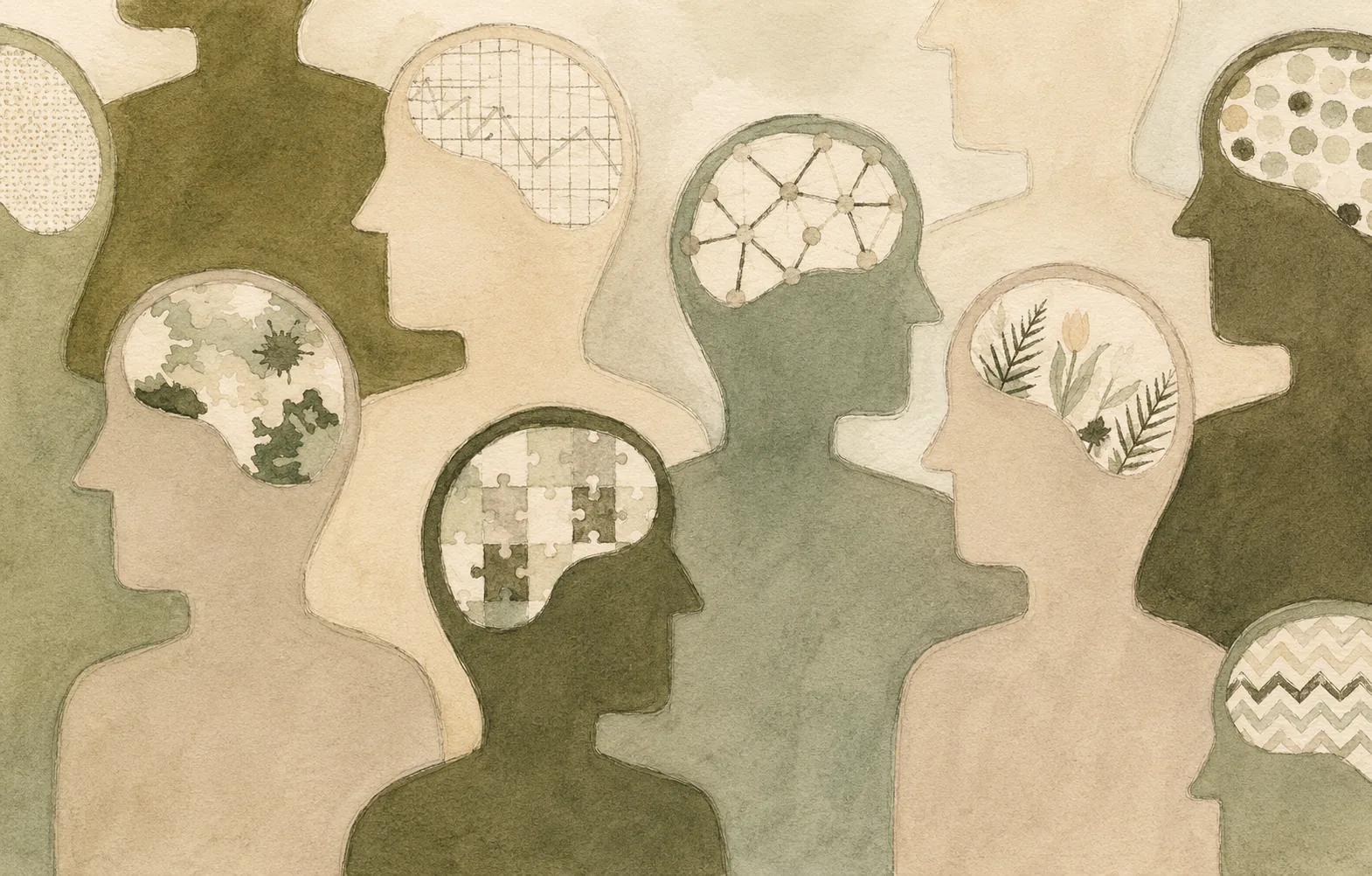
Instead, most professionals now recognise that dyslexia exists on a spectrum. Every individual has their own unique combination of strengths alongside areas that require additional support.
For example, one person may read accurately but very slowly, whilst another may struggle far more with spelling than reading. Someone else may have excellent vocabulary and reasoning skills but find working memory or rapid word retrieval particularly challenging. All of these presentations can occur within dyslexia.
This is one of the reasons why comparing yourself or your child with someone else’s experience can be misleading. No two people with dyslexia present in exactly the same way.
A comprehensive diagnostic assessment therefore looks beyond trying to fit someone into a particular “type”. Instead, it explores the individual’s underlying cognitive profile to understand why they are experiencing difficulties and, more importantly, what support is most likely to help.
Ultimately, whether someone shows characteristics that are often described as phonological, surface or another pattern matters far less than understanding their own unique profile. That individual profile is what should guide support at school, university, in the workplace and in everyday life.
The four main types you may have read about
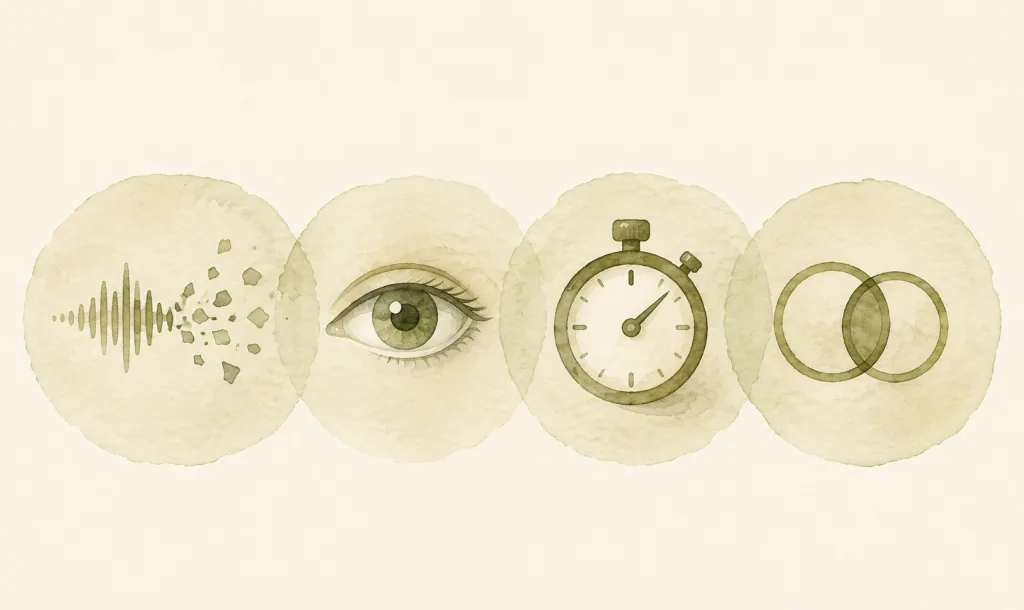
The four types are usually grouped together.
The first is phonological dyslexia. This describes difficulty breaking words into their individual sounds, which makes sounding out unfamiliar words hard.
The second is surface dyslexia. This describes difficulty recognising whole words by sight, so irregular spellings cause problems.
The third is a rapid naming deficit. This describes difficulty naming letters, numbers or colours quickly, which can slow reading down.
The fourth is double deficit dyslexia. This combines a phonological difficulty with a rapid naming deficit, and it is often described as the most significant profile.
How we see it in the UK
These labels can be a useful way to talk about reading. Even so, they are not part of how we assess dyslexia here. UK practice does not sort a person into one of these boxes. Instead, an assessment asks a simpler question. Does this person's profile meet the definition of dyslexia, or does it not?
This reflects how dyslexia is understood across UK education and assessment. It is seen as a continuum rather than a set of fixed categories. There is no clean line that separates one type from another. Additionally, most people show their own mix of strengths and difficulties. Two people with the same identification can look quite different in practice.
What this really tells us
What this really shows us is something important. Dyslexia is wide, varied and complex. A single label could never capture that fully. Every profile is personal to the individual. That is exactly why a careful assessment matters.
A final word
If the online definitions have left you feeling confused, that is completely understandable. The picture is simpler than it first appears. The question is not which type a person has. The question is whether their profile fits the UK recognised definition, and what support will help them next.
About Defining Dyslexia and the author
About the author
Mark
Specialist dyslexia assessor and founder of Defining Dyslexia
Mark is a qualified teacher and specialist assessor who has worked across mainstream and SEND education, including as a SENCo. He holds an Assessment Practising Certificate and is a member of PATOSS, and he carries out every Defining Dyslexia assessment personally, from the first conversation through to talking the report through with you.
- PATOSS member
- Assessment Practising Certificate
- PGCE
- NASENCo
- CPT3A
- PgDip SpLD
About Defining Dyslexia
Diagnostic dyslexia assessments for children, adults and students
Defining Dyslexia provides full diagnostic SpLD assessments for children, adults and university and college students. Face-to-face assessments are available in Sheffield and South Yorkshire, Peterborough and Cambridgeshire, and Stamford and Rutland, with remote assessments available UK-wide. Every assessment includes time to talk through the findings together, so you leave with a clear understanding of the results rather than a document to decipher alone.
If you have questions, or you are wondering whether an assessment might be the right next step, a free 15-minute telephone call is available with no obligation.