Signs of Dyslexia in Adults: Could You Have Been Missing a Diagnosis Your Whole Life?
Many adults living with dyslexia were never identified during their school years. Some developed coping strategies so effective that their difficulties went unnoticed by teachers and…
By Mark, specialist dyslexia assessor

Many adults living with dyslexia were never identified during their school years. Some developed coping strategies so effective that their difficulties went unnoticed by teachers and parents alike. Others were simply told they weren't trying hard enough, or that they were lazy, or that they just needed to read more. If any of that resonates, you're far from alone, and it's never too late to seek answers.
This guide outlines the most common signs of dyslexia in adults, covers how it can affect work and study, and explains what you can do if you recognise yourself in what you read.
Dyslexia doesn't disappear in adulthood
Dyslexia is a lifelong condition. It doesn't go away when you leave school, and for many adults it continues to affect daily life in ways that can be frustrating, exhausting, and damaging to self-confidence. The difference in adulthood is that the demands of work, study, and everyday life can make the challenges both more visible and more significant.
It's also worth saying clearly that dyslexia has nothing to do with intelligence. Many adults with dyslexia are highly capable, creative, and successful. They have simply had to work considerably harder than their peers to get there.
Common signs of dyslexia in adults
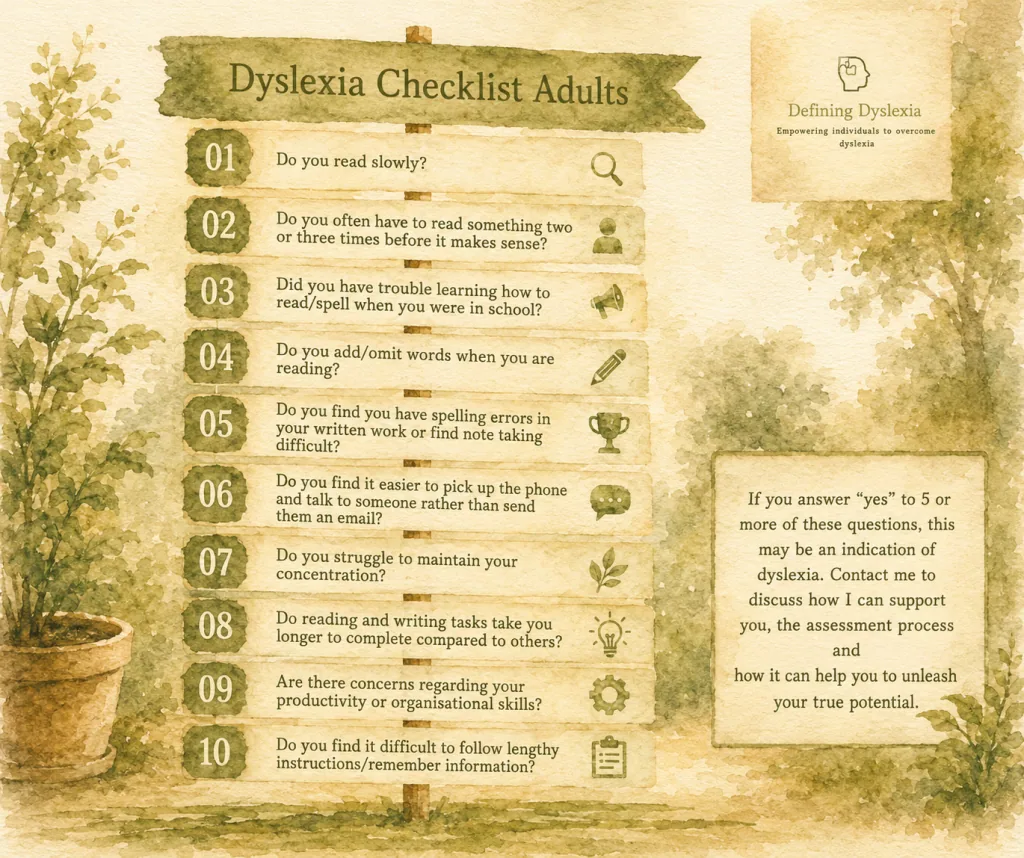
The signs of dyslexia in adults can be wide-ranging and don't always look the way people expect. Some of the most common include difficulty recalling past conversations and often being accused of not listening, trouble remembering names even for people or places encountered regularly, mispronouncing words when speaking or misspelling them when writing without always realising, and confusing visually similar words such as "can" and "cab."
Additionally, many adults with dyslexia avoid reading whenever possible, preferring shorter formats over longer documents, and may struggle to pronounce unfamiliar words when reading aloud. Getting lost with written directions, becoming self-conscious when speaking to a group, and relying heavily on others for help with written correspondence are also common experiences.
Perhaps most significantly, many adults carry a quiet sense of not quite keeping up, of having to work twice as hard to achieve the same results as colleagues or peers, without ever having understood why.
Signs of dyslexia in the workplace
The workplace can bring a particular set of challenges for adults with unidentified dyslexia. Common indicators include resisting reading aloud during meetings, avoiding public speaking wherever possible, needing to read emails or documents several times before fully understanding them, and disliking unfamiliar fonts or handwritten materials.
The workplace can bring a particular set of challenges for adults with unidentified dyslexia.
Other workplace signs include randomly placing capital letters when writing by hand, relying heavily on spell-check, becoming easily distracted when reading long documents, shying away from planning or administrative tasks, and developing complex but exhausting coping strategies to hide difficulties from colleagues.
If any of these feel familiar, it's worth knowing that support is available and that a formal assessment can open the door to meaningful workplace adjustments.
Signs of dyslexia in higher education
For adults returning to study or currently at university, dyslexia can create significant challenges with note-taking, essay writing, managing deadlines, and processing large volumes of written information. Many students reach higher education without ever having been assessed, having just about managed through school with effort and determination.
A formal assessment at this stage can be genuinely transformative. It opens the door to DSA funding, the Disabled Students Allowance, which, despite its unhelpful name, is simply government funding designed to level the playing field for students with specific learning difficulties. It also provides access to exam accommodations and specialist study skills support.
The emotional side of a late diagnosis
For many adults, receiving a dyslexia diagnosis later in life brings a complicated mixture of emotions. Relief is usually the most prominent, finally having an explanation for difficulties that have caused confusion and self-doubt for years. But it can also bring a sense of grief for the support that wasn't there earlier, or frustration at what might have been different.
These responses are completely understandable and very common. A good assessor will take time to talk through the findings with you and help you make sense of what the results mean for your life going forward.
What should you do if you recognise these signs?
The first step is simply to take your concerns seriously. Many adults dismiss the idea of being assessed because they've managed this long, or because they don't want to make a fuss. However, understanding your own learning profile, whatever your age, gives you valuable tools for work, study, and everyday life.
A formal assessment carried out by a qualified specialist assessor will give you a clear and detailed picture of your cognitive profile, your specific areas of difficulty, and your genuine strengths. It also produces a report that carries real weight with employers, universities, and other organisations.
About Defining Dyslexia and the author
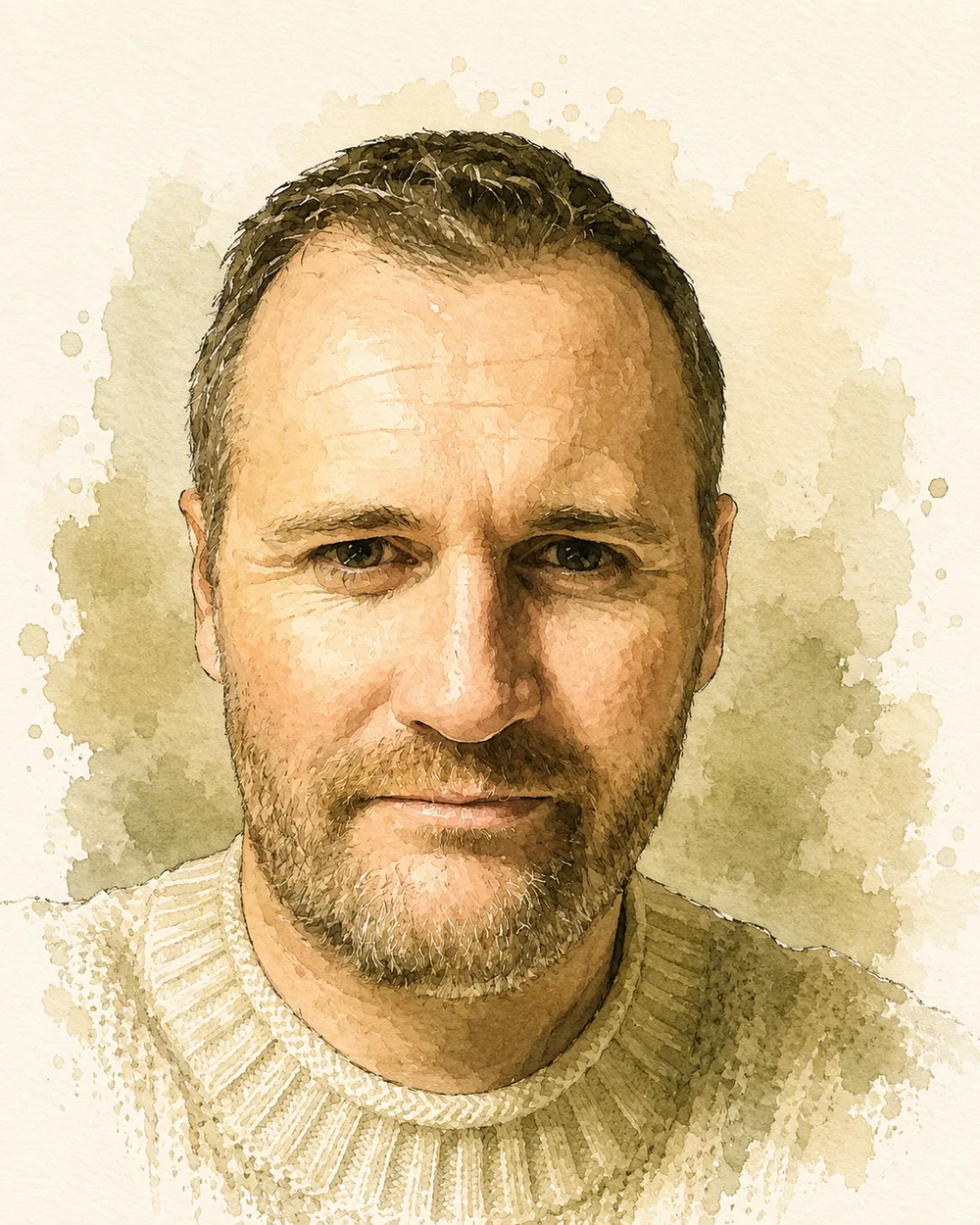
About the author
Mark
Specialist dyslexia assessor and founder of Defining Dyslexia
Mark is a qualified teacher and specialist assessor who has worked across mainstream and SEND education, including as a SENCo. He holds an Assessment Practising Certificate and is a member of PATOSS, and he carries out every Defining Dyslexia assessment personally, from the first conversation through to talking the report through with you.
- PATOSS member
- Assessment Practising Certificate
- PGCE
- NASENCo
- CPT3A
- PgDip SpLD
About Defining Dyslexia
Diagnostic dyslexia assessments for children, adults and students
Defining Dyslexia provides full diagnostic SpLD assessments for children, adults and university and college students. Face-to-face assessments are available in Sheffield and South Yorkshire, Peterborough and Cambridgeshire, and Stamford and Rutland, with remote assessments available UK-wide. Every assessment includes time to talk through the findings together, so you leave with a clear understanding of the results rather than a document to decipher alone.
If you have questions, or you are wondering whether an assessment might be the right next step, a free 15-minute telephone call is available with no obligation.