What Equipment Do I Need for a Remote Dyslexia Assessment?
Remote dyslexia assessment is simpler to set up than most people expect. This guide explains the equipment, space and materials needed, in plain English.
By Mark, specialist dyslexia assessor
One of the first questions people ask about remote dyslexia assessment is also one of the easiest to answer: what do I actually need?
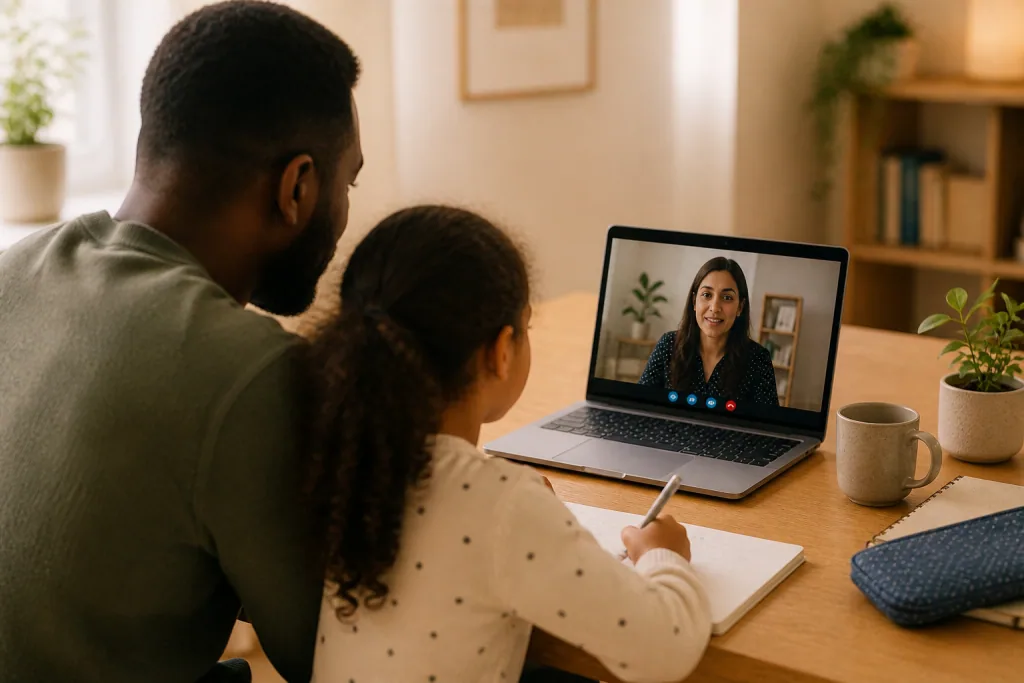
The short answer is very little. If you have a laptop or desktop computer, a reasonably reliable internet connection, and a quiet room, you are most of the way there. Everything else is either sent to you in advance or explained on the day.
A laptop or desktop computer
A full-size screen and keyboard make the session much easier to manage. Some of the activities involve reading and responding to things on screen, and a laptop or desktop simply works better than a phone or tablet.
Camera and microphone
These are usually built into your laptop or webcam. Mark needs to see and hear you or your child clearly throughout the session, because observation is part of the assessment. The camera is also used to take pictures of the writing games and return them afterwards. That is the only thing the camera is needed for. Nothing complicated, and no special app.
A reliable internet connection
Stability matters more than speed. A wired connection is ideal, but a strong Wi-Fi signal close to the router works well for most people. If the connection dips during the session, it is usually easy to reconnect and carry on.
A quiet, private room
Choose a room where you or your child will not be interrupted. Spoken and timed games need concentration, and a calm environment helps the person being assessed feel settled. A table or desk and a comfortable chair are all the furniture you need.
Paper and a pen or pencil
Some of the games are handwritten. You will be told in advance exactly what to have ready on the desk, but it is usually just plain paper and a pen or pencil. Nothing fancy, and nothing to buy specially.
Some of the games are handwritten. You will be told in advance exactly what to have ready on the desk, but it is usually just plain paper and a pen or pencil.
Glasses, hearing aids and anything you normally use
If reading glasses, hearing aids or any other everyday aid is normally used, it should be used for the assessment too. The session is designed to show how you or your child usually perform, so it helps if conditions are normal.
What Mark provides
Any digital materials, screen-shared games and joining instructions are sent to you beforehand. You do not need to print anything, set up accounts or download unfamiliar software. A short technical check is arranged before the assessment so everything is working and nothing is a surprise on the day.
A quick pre-session checklist
- Laptop or desktop computer with camera and microphone
- Reliable internet connection; wired or strong Wi-Fi
- Quiet, private room with a table and chair
- Plain paper and a pen or pencil
- Glasses or hearing aids if normally worn
- A parent or carer nearby if the assessment is for a child
That really is it. Remote assessment sounds more technical than it is. Once the practical side is sorted, the session itself is just a conversation and a series of games and activities, guided by Mark in real time.
If you are unsure whether your setup will work, the easiest next step is to book a free telephone call or send a quick enquiry. Mark can talk it through with you and, if needed, arrange a short tech check so you feel confident before the day.
About Defining Dyslexia and the author
About the author
Mark
Specialist dyslexia assessor and founder of Defining Dyslexia
Mark is a qualified teacher and specialist assessor who has worked across mainstream and SEND education, including as a SENCo. He holds an Assessment Practising Certificate and is a member of PATOSS, and he carries out every Defining Dyslexia assessment personally, from the first conversation through to talking the report through with you.
- PATOSS member
- Assessment Practising Certificate
- PGCE
- NASENCo
- CPT3A
- PgDip SpLD
About Defining Dyslexia
Diagnostic dyslexia assessments for children, adults and students
Defining Dyslexia provides full diagnostic SpLD assessments for children, adults and university and college students. Face-to-face assessments are available in Sheffield and South Yorkshire, Peterborough and Cambridgeshire, and Stamford and Rutland, with remote assessments available UK-wide. Every assessment includes time to talk through the findings together, so you leave with a clear understanding of the results rather than a document to decipher alone.
If you have questions, or you are wondering whether an assessment might be the right next step, a free 15-minute telephone call is available with no obligation.