
Skip to content
Defining Dyslexia

Professionals & referrers

Working together to provide the right support at the right time

Whether you are a school, tutor, university, therapist, psychologist or another professional supporting children, young people or adults, we welcome the chance to work collaboratively. Different professionals answer different questions, and a specialist dyslexia assessment answers one of them well.

When professionals signpost us

Situations where a specialist assessment may help

There is no formal referral process. Professionals simply recommend Defining Dyslexia where they feel an assessment may be appropriate, and the individual or family decides whether to get in touch.

Schools, colleges and SENCos

A pupil continues to struggle with literacy despite good teaching and targeted intervention, and the setting wants to understand why.

Support for schools

Universities and higher education

A student reaches higher education with long-standing literacy difficulties that have never been formally explored.

University assessments

Tutors and specialist teachers

Persistent patterns emerge during teaching that suggest a specific learning difficulty is worth investigating properly.

Child assessments

Health and therapy professionals

A speech and language therapist or occupational therapist identifies literacy or learning difficulties affecting education or work.

Adult assessments

Educational psychologists

An independent specialist diagnostic assessment of literacy and underlying skills would complement existing work.

Pricing

Employers and workplace services

An employee's difficulties with reading, writing or organisation are affecting work, training or professional qualifications.

Adult assessments

Working together

Different professionals answer different questions

A dyslexia assessment describes one part of someone's wider profile: literacy, underlying cognitive skills and how these affect learning, study or work. It sits alongside, rather than replaces, what others already know.

With the individual's consent, assessment can take account of information from school, from parents and carers, and from existing professional reports, including speech and language therapy, occupational therapy and educational psychology. Findings can then be discussed with you so that everyone involved is describing the same person in the same terms.

Defining Dyslexia provides specialist assessment of dyslexia and related specific learning difficulties. It does not provide clinical psychology, educational psychology, speech and language therapy or occupational therapy services, and does not diagnose conditions outside that professional scope.

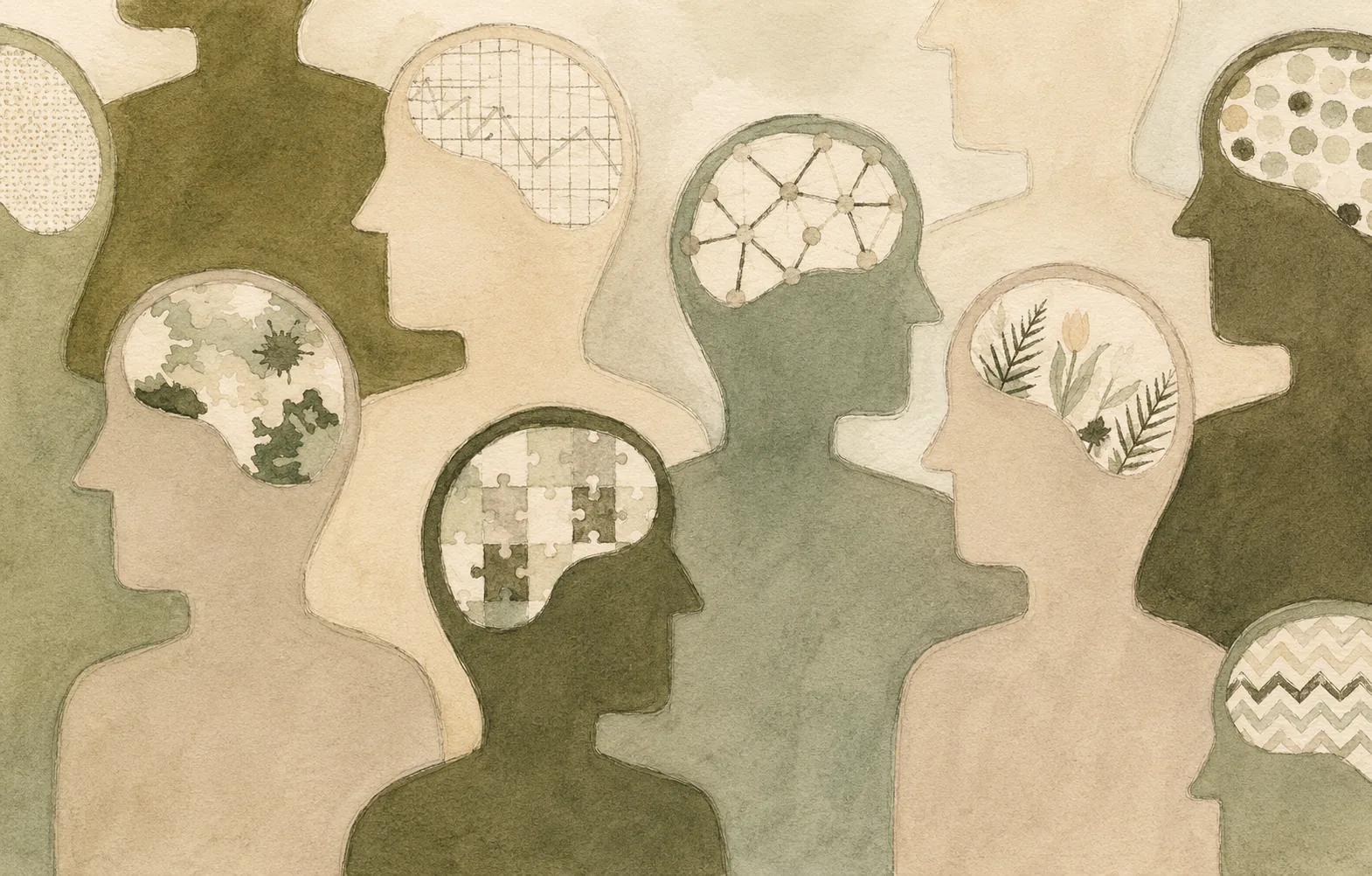
Illustration of education, health and assessment professionals working together around one table to support the same person

How it works

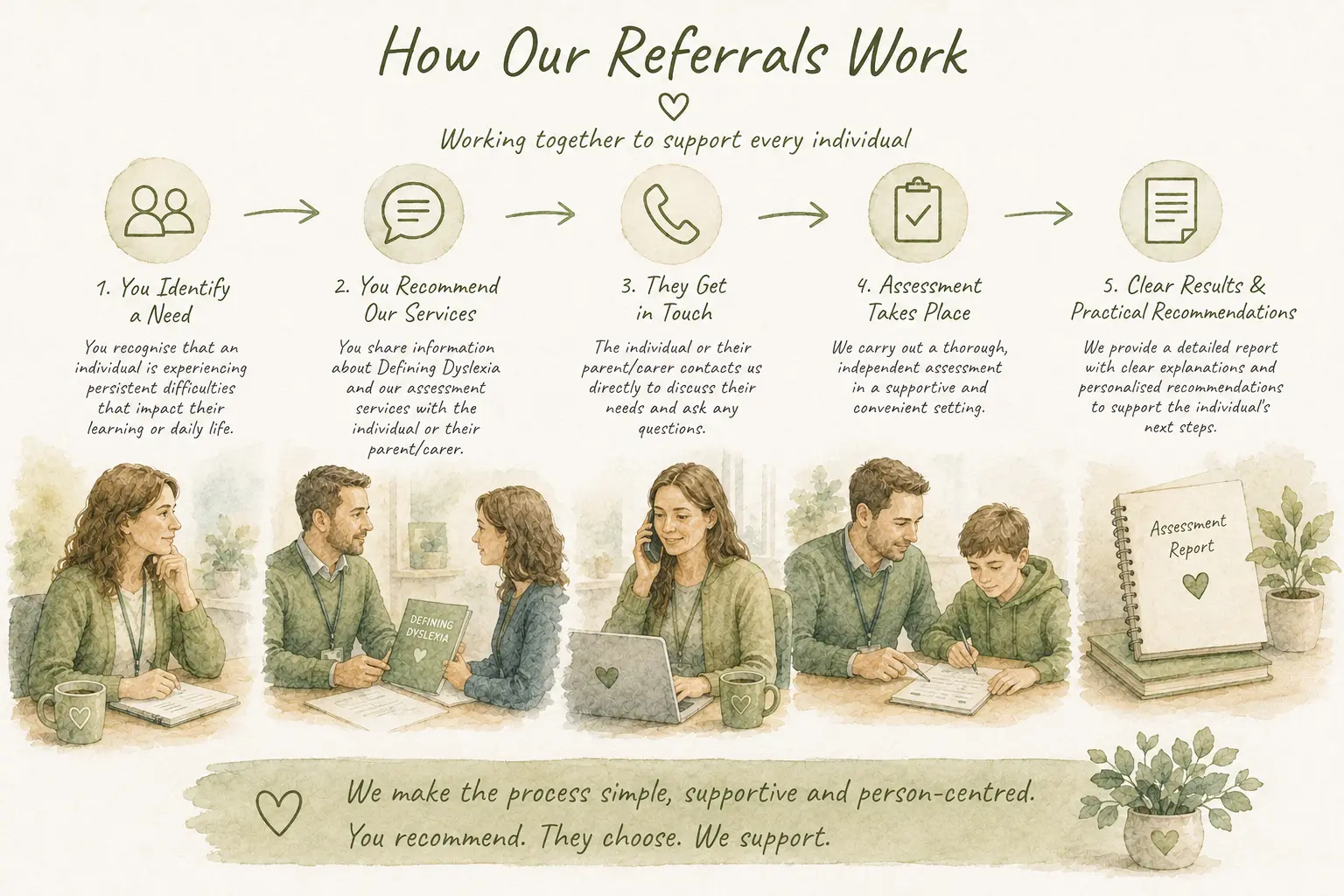
A straightforward referral route

  1. 01

    Get in touch

    A school or professional contacts Mark directly by email, the enquiry form or a free 15-minute call. There is no formal referral paperwork.

  2. 02

    Discuss the need

    We clarify the question being asked and whether a specialist dyslexia assessment is the right way to answer it.

  3. 03

    Agree the next step

    That might be a diagnostic assessment, consultancy, training, or a suggestion that a different professional is better placed to help.

  4. 04

    The individual decides

    Where an assessment is appropriate, the individual or family contacts us and makes their own informed decision. Nobody is obliged to proceed.

  5. 05

    The work is completed

    Background information is gathered, the assessment or agreed service takes place, and everyone knows what to expect beforehand.

  6. 06

    Clear outcomes

    A full report, feedback and practical recommendations. With consent, findings can be discussed with the referring professional.

Illustrated diagram of the Defining Dyslexia referral process, from first enquiry through assessment to the written report and next steps
View the referral diagram larger

Honest signposting

When another professional may be more appropriate

Not every difficulty is best answered by a dyslexia assessment. Where concerns appear to sit primarily elsewhere, we will say so and suggest discussing an onward referral, rather than assessing for the sake of it.

  • Speech, language and communication difficulties, speech and language therapy
  • Motor coordination, sensory or daily-living difficulties, occupational therapy
  • Broader questions about learning, behaviour and emotional wellbeing in school, educational psychology
  • Attention, ADHD, autism or other diagnoses, the appropriate health or clinical pathway
  • Vision or hearing concerns, an optometrist, orthoptist or audiologist

Equally, an assessment sometimes identifies patterns worth exploring with another professional. Any suggestion of this kind is based on professional judgement. There is no obligation to follow it, and families are always free to choose their own provider.

Why professionals recommend us

An independent, evidence-based assessment experience

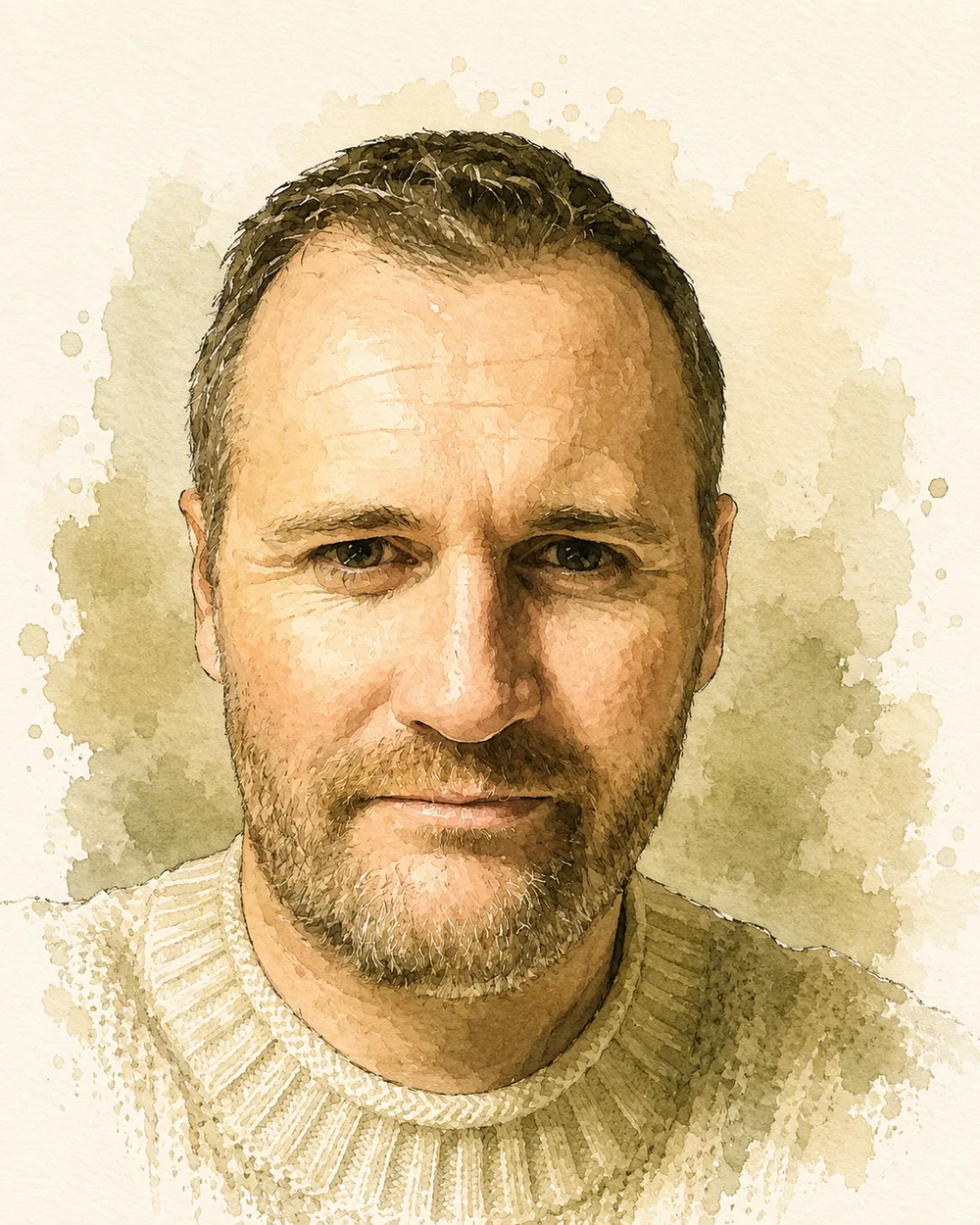
Mark, specialist dyslexia assessor at Defining Dyslexia
Mark, specialist assessor, SEND consultant and former SENCo.

Your assessor

You know exactly who is doing the assessment

Every assessment is carried out personally by Mark, in line with current SASC guidance, with clear explanations, practical recommendations and follow-up discussion where it helps. Remote and face-to-face assessments are available, and pricing is published openly.

  • Qualified teacher (PGCE, Secondary)
  • Former SENCo and Designated Safeguarding Lead
  • National Award for SEN Co-ordination (NASENCo)
  • PgDip Specific Learning Difficulties and Inclusion
  • CPT3A, psychometric testing, assessment and access arrangements
  • Current Assessment Practising Certificate (APC)
  • PATOSS member; reports written in line with current SASC guidance
Full background and qualifications

Professional connections

Directories and family information we are part of

Two external connections we are glad to be associated with. Listing on a directory or linking to another organisation does not mean either organisation formally endorses every Defining Dyslexia service, or vice versa.

ND360 Neurodiversity Hub recognised provider

ND360 Neurodiversity Hub

Defining Dyslexia is a recognised provider with the ND360 Neurodiversity Hub, which helps individuals and families find ethical and inclusive neurodiversity services.

My Family, Our Needs

My Family, Our Needs provides information and resources for parents and carers of children and young people with special educational needs and disabilities.

Visit My Family, Our Needs

Useful reading

Background you can share with the people you support

Have a question before you signpost someone?

We are always happy to talk through a situation informally, answer questions about the assessment process, and say whether a diagnostic assessment is likely to be the right next step.