Rutland
Dyslexia Assessments in Rutland
Rutland is England's smallest county, with a close-knit rural community spread across Oakham, Uppingham and the villages between them. Being small has a consequence: local specialist provision is thin, and families have traditionally travelled to Peterborough, Leicester or further afield for a dyslexia assessment.
That is the barrier this page is really about. Whether you are a parent at Casterton College, a family near Rutland Water, a student at Oakham School or Uppingham School needing access arrangement evidence, or an adult who has wondered for years, a specialist assessment is available without a long journey.
- Children from age 8, adults and students
- Face-to-face locally, or remote UK-wide
- Mark, PATOSS-registered assessor
- £495 including the full written report
Transparent pricing
£495
A full diagnostic dyslexia assessment, including the comprehensive written report and practical recommendations. Where a venue has to be hired, or where an adult assessment includes screening for co-occurring difficulties, any additional fee is discussed and agreed with you before anything is confirmed.
See full pricingAreas covered
- Oakham
- Uppingham
- Cottesmore
- Ketton
- Empingham
- Rutland Water villages
- Whissendine
Remote assessments are available anywhere in the UK.
Face-to-face that comes to you
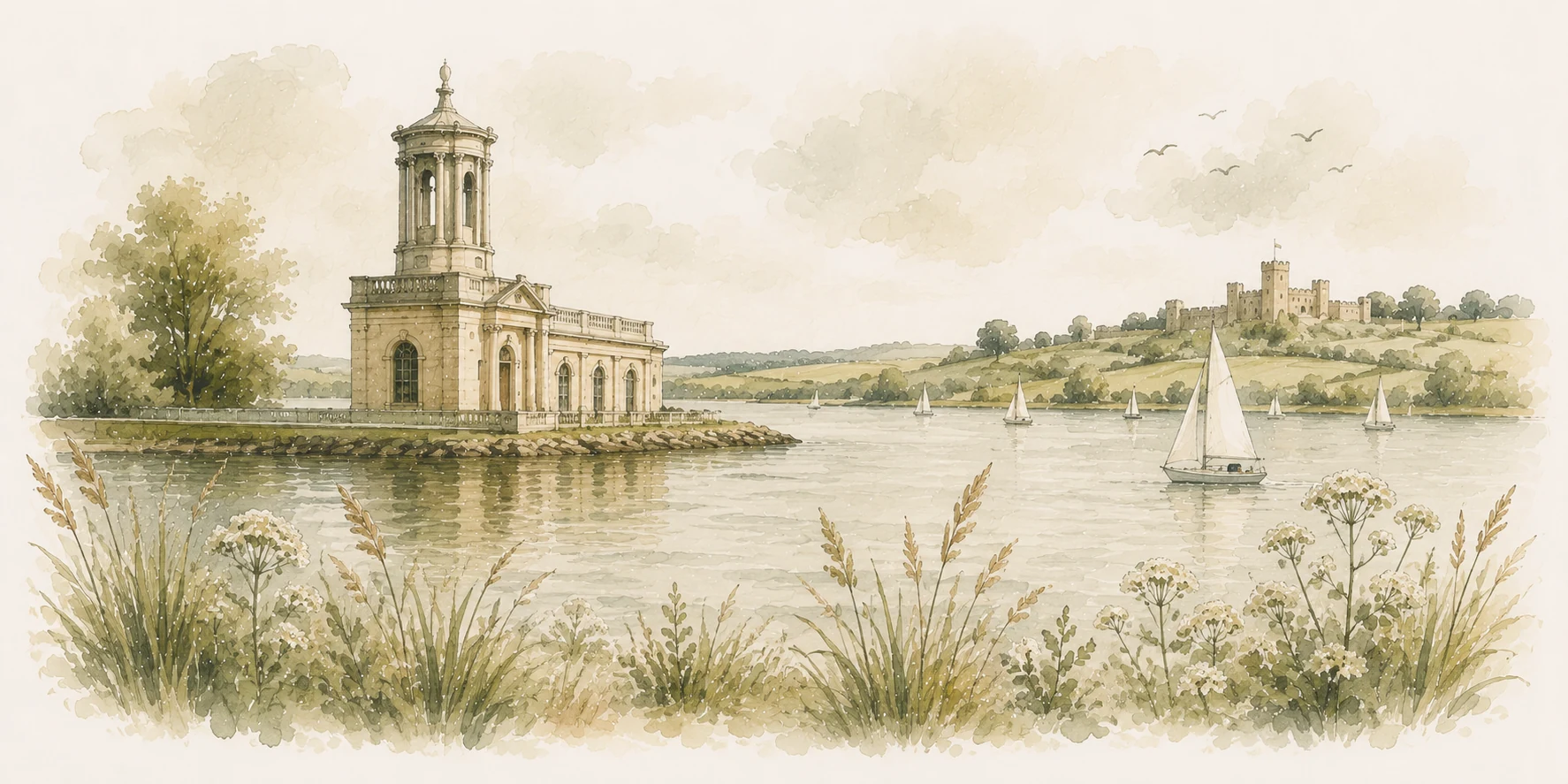
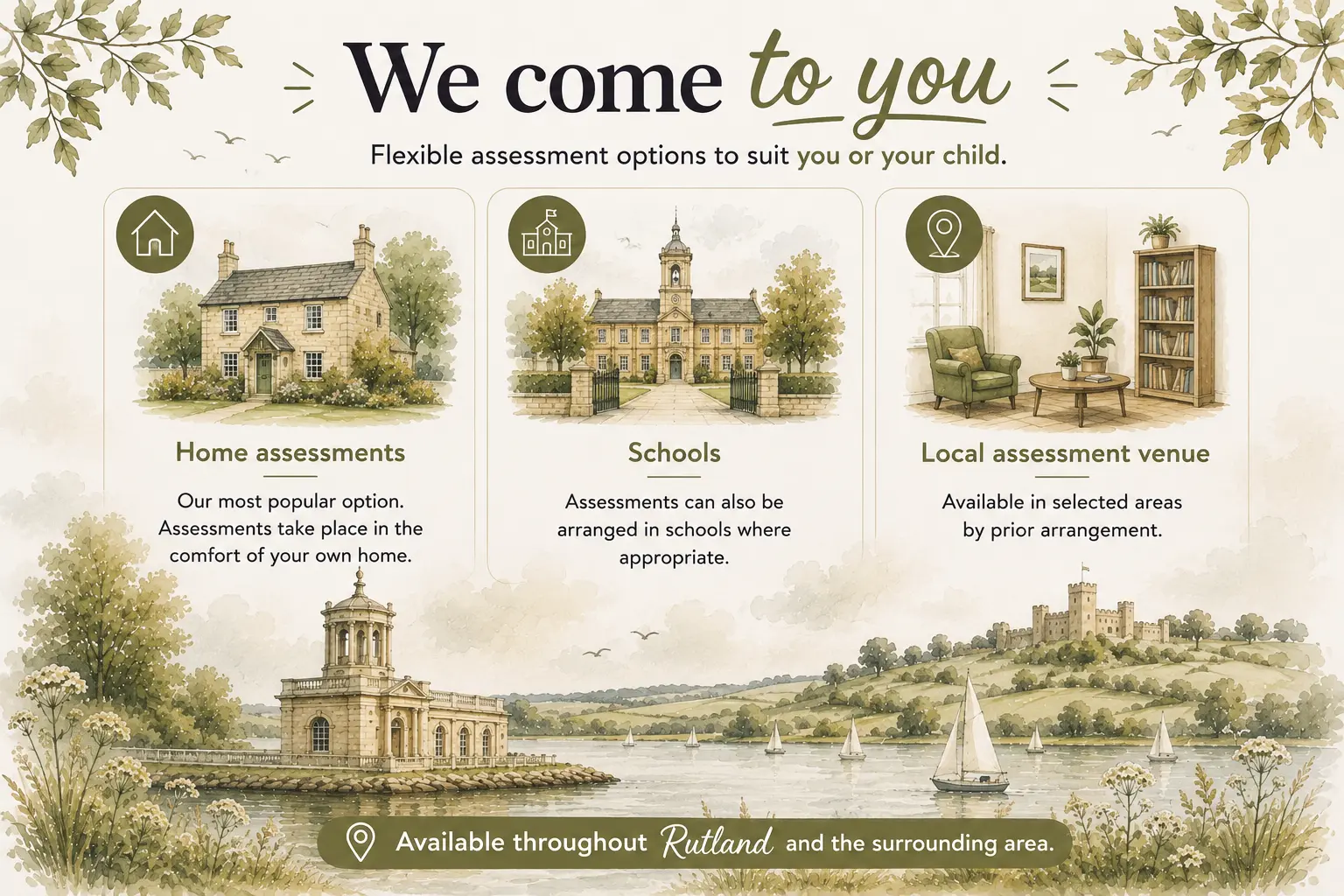
Assessment shouldn't add another journey to the week. Across Rutland, Mark travels to you, and remote assessment is available where that suits better.
- At home
- At school
- An agreed setting
- Remotely
Availability depends on location and on the room being quiet and suitable, so it is worth asking early. There is no assessment centre to visit.
Who assessments are for
Assessments in Rutland for children, adults and students
Children from age 8
For parents who have raised concerns at school and want a clear answer rather than another wait.
Read moreAdults
For people who have managed for years and want to understand why certain things take more effort.
Read moreUniversity & college students
For students needing SASC-standard diagnostic evidence for DSA and study support.
Read moreLocal picture
A small county with limited specialist provision
Rutland County Council is the smallest unitary authority in England, and its SEND team is correspondingly small. It publishes a Local Offer and works with SENDIASS Rutland, delivered in partnership with the Leicester service, to provide free impartial advice, both are worth using.
What the county does not have is a ready supply of independent SpLD assessors. For most Rutland families the choice has been a long drive or a long wait, and that is precisely why remote assessment has become the norm here rather than the exception.
Rutland's independent schools, including Oakham School and Uppingham School, require formal diagnostic reports to support access arrangement and exam concession applications. No school has the capacity to assess every pupil to that depth, which is why an independent specialist report is usually the starting point.
Where the assessment takes place
Remote assessment is particularly well suited to Rutland, and many families across the county choose it for exactly that reason. The session runs over a secure video platform with breaks built in, and produces the same SASC-standard report as an in-person assessment.
Face-to-face assessments in Rutland are arranged from the Peterborough side, at home or at school where the school agrees. Availability varies by week, so it is worth asking at enquiry stage rather than assuming either way.
The assessment itself
What a full diagnostic assessment involves
An assessment usually takes around two to three hours, with breaks, and can be split across two shorter sessions where that would suit better. It begins with a conversation about background, education and what has prompted the enquiry, followed by a series of standardised tasks.
Those tasks look at underlying cognitive processing, verbal and non-verbal reasoning, phonological processing, working memory and processing speed, alongside attainment in reading, spelling and writing. It is the relationship between those areas, not any single score, that determines whether the profile meets the criteria for dyslexia.
Every assessment is carried out to the standards set by SASC, and the written report follows within an agreed timescale. It sets out the findings in plain English, explains what they mean day to day, and makes practical recommendations for school, college, university, work or home.
What you receive
- A full diagnostic report written to SASC standards
- A clear explanation of strengths as well as difficulties
- A formal diagnostic outcome where the criteria are met
- Practical recommendations for education, work or study
- A follow-up conversation to talk the findings through
Local SEND information
The Local Offer for Rutland
Rutland County Council
Rutland SEND Local Offer
England's smallest county publishes its own Local Offer through the Rutland Information Service.
Open the Rutland Local OfferFor free, impartial advice about school support, EHC needs assessments or disagreements, contact SENDIASS Rutland.
How this fits with an assessment
Every local authority in England must publish a Local Offer setting out the SEND provision available in its area. Defining Dyslexia is an independent specialist assessment service and is not part of, commissioned by or endorsed by any local authority. These links are provided because they are genuinely useful sources of wider information.
A diagnostic assessment is one form of evidence. The Local Offer is where you find what your council already provides, and what to ask for locally.
See every area we coverUseful local information
Dyslexia and SEND support in Rutland
These are independent organisations, not part of Defining Dyslexia. They are free to contact and worth using alongside (or before) a private assessment.
SENDIASS Rutland
Free, impartial SEND advice for Rutland families, delivered with the Leicester service.
Visit websiteRutland County Council SEND team
Direct contact for statutory SEND support in the county.
01572 758280 · send@rutland.gov.uk
Knowledge Centre
Guidance for families in Rutland
Can a dyslexia assessment be done remotely?
How a remote assessment works and when it suits a family better than travelling.
ReadDyslexia and exam access arrangements: what schools need to provide
Who decides access arrangements, and what evidence the school needs.
ReadSigns of dyslexia in adults
For adults wondering whether a lifetime of difficulty has an explanation.
ReadQuestions we are asked locally
Rutland: frequently asked questions
01Does Rutland have local dyslexia assessors, or do I need to travel?
Specialist assessors are not widely available within Rutland itself, which is why families have traditionally travelled to Peterborough, Leicester or further. A fully remote assessment removes that journey entirely while meeting the same standards as a face-to-face session.
02Are remote assessments as valid as face-to-face for Rutland families?
Yes. Remote assessments meet the same SASC standards, and the written report is used in the same way by schools, colleges, universities, exam boards and employers. The difference is the delivery, not the quality of the evidence.
03Can the report support an access arrangement application at Oakham School or Uppingham School?
It provides the detailed diagnostic evidence schools need. Under JCQ regulations the school's SENCo or examinations officer leads the application and the decision is made through that process. The report gives them the specialist evidence to work from.
04Are face-to-face appointments possible in Rutland at all?
Sometimes, arranged from the Peterborough side, at home or at school. It depends on availability in a given week, so it is worth asking rather than assuming. Remote is normally quicker to arrange.
05I am an adult in Rutland and was never assessed. Is it too late?
It is never too late. Many adults get in touch after years of managing without ever understanding why reading, writing or spelling felt so much harder than it appeared to be for others. An adult assessment gives you a clear cognitive profile, a formal outcome where the criteria are met, and practical recommendations for work or study. Screening for co-occurring difficulties such as ADHD or dyspraxia can be included where relevant, for a small additional fee discussed at enquiry stage.
06How quickly can a remote appointment be arranged from Rutland?
Waiting times are under two months at all times and often considerably shorter, with remote appointments generally available sooner than face-to-face ones.
About your assessor
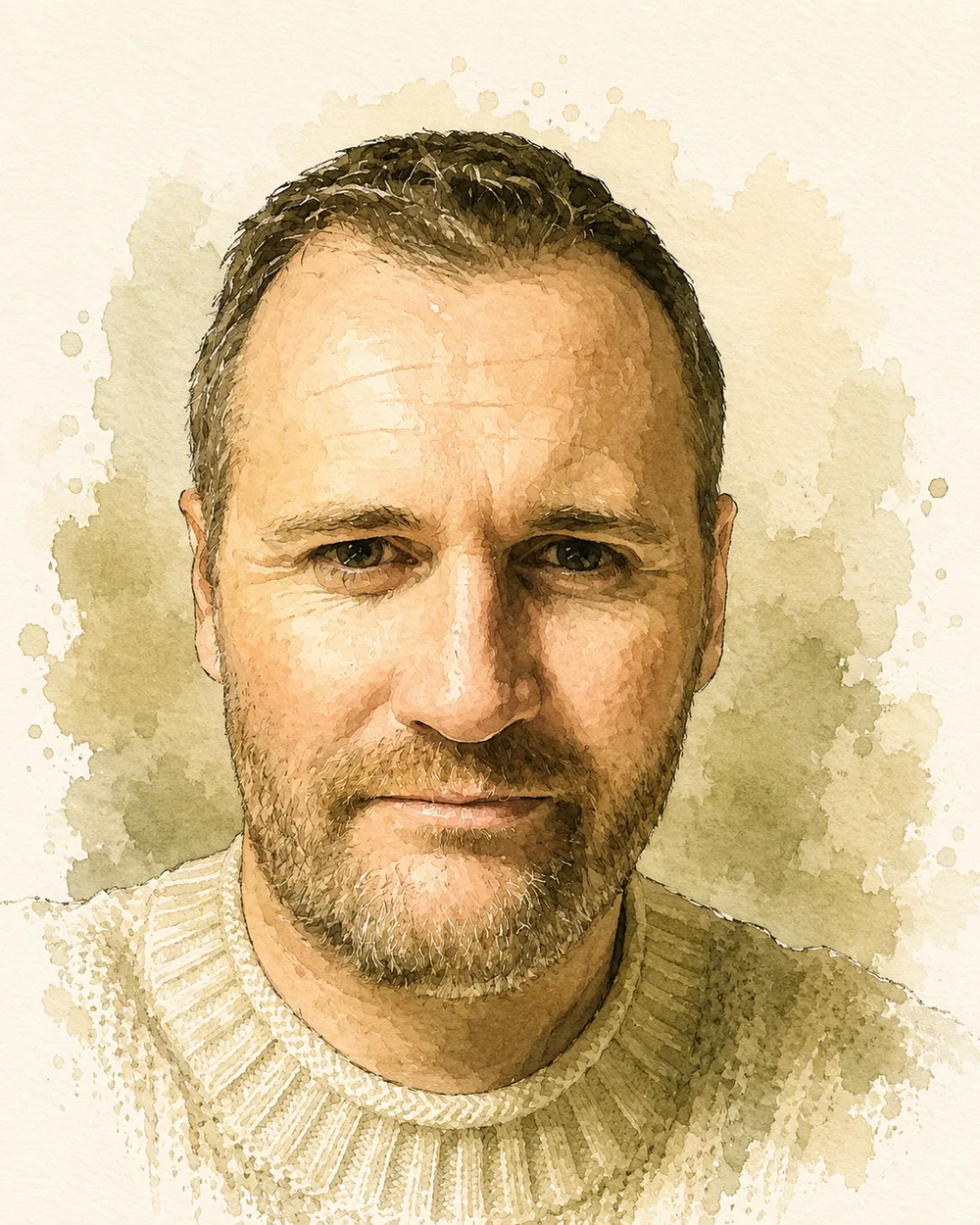
You are booking with Mark
Every assessment in Rutland is carried out by Mark personally. He is a PATOSS-registered specialist assessor with fifteen years of experience working with children, young people and adults, and holds a current Assessment Practising Certificate (APC), working to the standards set by SASC.
He is a qualified teacher and former SENCo, which shapes how the reports are written, for the people who have to use them. You will not be allocated to an unknown assessor by a national company: you speak to Mark at enquiry, he carries out the assessment, and he writes the report.
More about MarkTaking the next step in Rutland
Tell us a little about the situation and we will reply within one working day. If you would rather talk it through first, a free 15-minute telephone call is often the easiest place to start.
Not sure yet? Try a free dyslexia indicator check.