Stamford & the Lincolnshire border
Dyslexia Assessments in Stamford
Stamford is one of England's finest market towns, with an unusually concentrated mix of maintained and independent schools for a place of its size, and a community that stretches out towards Bourne, Market Deeping, Ketton and the Rutland border.
Mark has previously worked in a school in Stamford, which gives him a genuine feel for the town's educational landscape. How the schools work, what they ask for, and where families tend to get stuck.
- Children from age 8, adults and students
- Face-to-face locally, or remote UK-wide
- Mark, PATOSS-registered assessor
- £495 including the full written report

Transparent pricing
£495
A full diagnostic dyslexia assessment, including the comprehensive written report and practical recommendations. Where a venue has to be hired, or where an adult assessment includes screening for co-occurring difficulties, any additional fee is discussed and agreed with you before anything is confirmed.
See full pricingAreas covered
- Stamford
- Ketton
- Uffington
- Market Deeping
- Bourne
- Easton on the Hill
- Ryhall
Remote assessments are available anywhere in the UK.
Face-to-face that comes to you
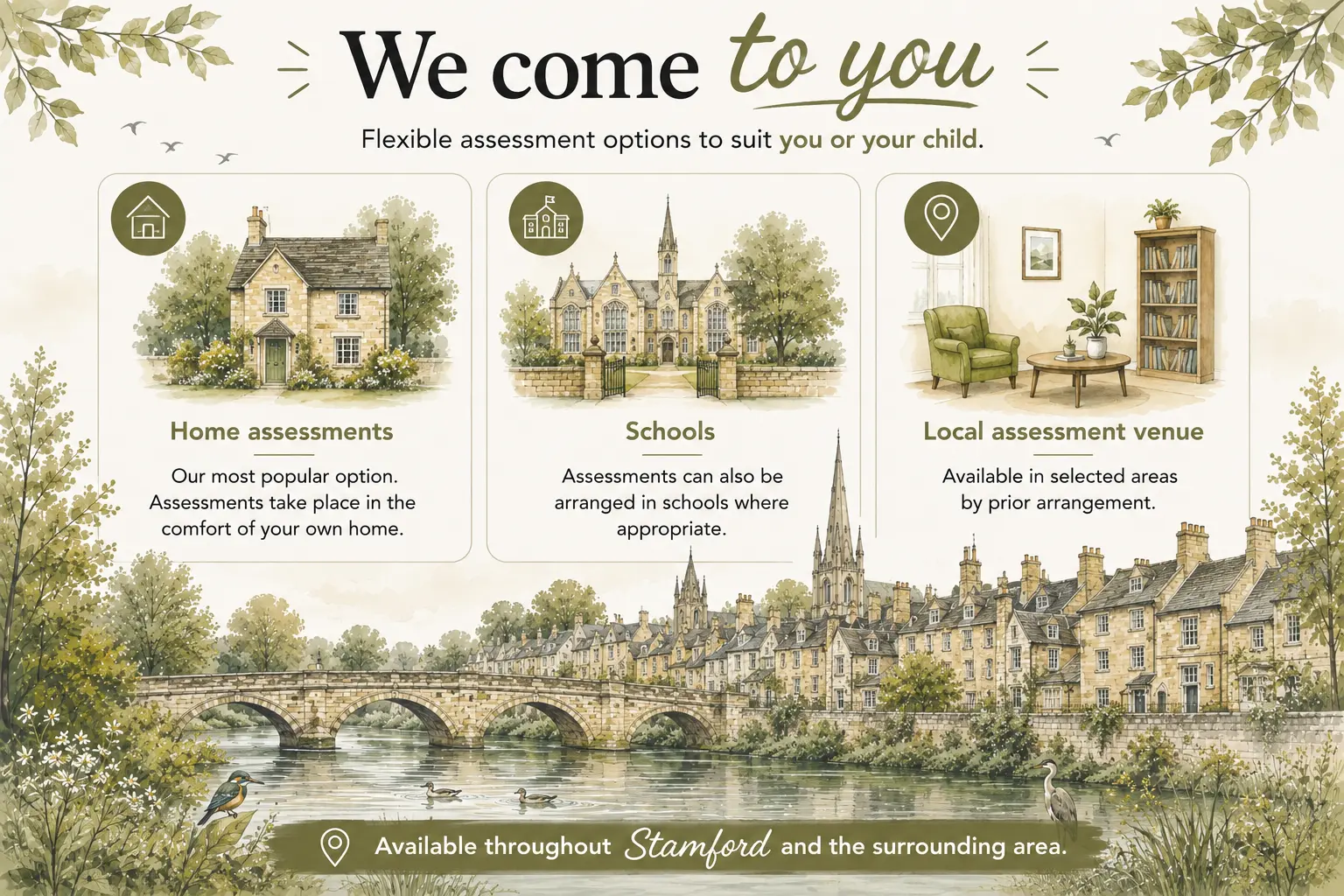
Assessment shouldn't add another journey to the week. Across Stamford, Mark travels to you, and remote assessment is available where that suits better.
- At home
- At school
- An agreed setting
- Remotely
Availability depends on location and on the room being quiet and suitable, so it is worth asking early. There is no assessment centre to visit.
Who assessments are for
Assessments in Stamford for children, adults and students
Children from age 8
For parents who have raised concerns at school and want a clear answer rather than another wait.
Read moreAdults
For people who have managed for years and want to understand why certain things take more effort.
Read moreUniversity & college students
For students needing SASC-standard diagnostic evidence for DSA and study support.
Read moreLocal picture
Stamford's schools and access arrangement evidence
Stamford is home to the Stamford Endowed Schools (Stamford School, Stamford High School and Stamford Junior School) alongside maintained schools serving the town and the villages around it. It is a competitive academic environment, and one where formal diagnostic evidence is often needed.
Under JCQ regulations, exam access arrangements must be supported by evidence from a qualified specialist assessor, and it is the school's SENCo or examinations officer who leads the application using that evidence. A diagnostic report gives them the detail they need; the decision itself stays with the school and, ultimately, the awarding body.
Families in Stamford also come with a particular pattern: an academically able child who is holding their own but working visibly harder than their peers to do it. That profile is easy to miss in a high-attaining school, and it is one an assessment is well suited to unpicking.
Where the assessment takes place
Face-to-face assessments in Stamford take place at home, at your child's school where the school agrees, or at a suitable local venue. Stamford is a short drive from Peterborough, so appointments are usually straightforward to arrange.
Remote assessment is equally available and is a popular choice with Stamford families fitting an assessment around school and work. Where a venue needs hiring for a face-to-face session, a small additional fee may apply and is agreed beforehand.
The assessment itself
What a full diagnostic assessment involves
An assessment usually takes around two to three hours, with breaks, and can be split across two shorter sessions where that would suit better. It begins with a conversation about background, education and what has prompted the enquiry, followed by a series of standardised tasks.
Those tasks look at underlying cognitive processing, verbal and non-verbal reasoning, phonological processing, working memory and processing speed, alongside attainment in reading, spelling and writing. It is the relationship between those areas, not any single score, that determines whether the profile meets the criteria for dyslexia.
Every assessment is carried out to the standards set by SASC, and the written report follows within an agreed timescale. It sets out the findings in plain English, explains what they mean day to day, and makes practical recommendations for school, college, university, work or home.
What you receive
- A full diagnostic report written to SASC standards
- A clear explanation of strengths as well as difficulties
- A formal diagnostic outcome where the criteria are met
- Practical recommendations for education, work or study
- A follow-up conversation to talk the findings through
Local SEND information
The Local Offer for Stamford
Lincolnshire County Council
Lincolnshire SEND Local Offer
Stamford sits in Lincolnshire, so the county Local Offer applies even where families use Peterborough or Rutland schools.
Open the Stamford Local OfferFor free, impartial advice about school support, EHC needs assessments or disagreements, contact Liaise Lincolnshire.
How this fits with an assessment
Every local authority in England must publish a Local Offer setting out the SEND provision available in its area. Defining Dyslexia is an independent specialist assessment service and is not part of, commissioned by or endorsed by any local authority. These links are provided because they are genuinely useful sources of wider information.
A diagnostic assessment is one form of evidence. The Local Offer is where you find what your council already provides, and what to ask for locally.
See every area we coverUseful local information
Dyslexia and SEND support in Stamford
These are independent organisations, not part of Defining Dyslexia. They are free to contact and worth using alongside (or before) a private assessment.
Liaise Lincolnshire
Free, impartial SEND information, advice and support for Lincolnshire families.
County Offices, Newland, Lincoln, LN1 1YQ · 0800 195 1635 · liaise@lincolnshire.gov.uk
Visit websiteKnowledge Centre
Guidance for families in Stamford
Dyslexia and exam access arrangements: what schools need to provide
Who decides access arrangements, and what evidence the school needs.
ReadThey're meeting expectations, so why does everything feel so hard?
When a capable child is coping on the surface but working far harder than their peers.
ReadHow to choose a dyslexia assessor: 8 things to check
The questions worth asking any assessor, wherever they are based.
ReadQuestions we are asked locally
Stamford: frequently asked questions
01My child's school in Stamford has mentioned dyslexia but suggested we wait and see. What should I do?
Wait and see is sometimes right in the early stages. But if concerns have been raised more than once, if additional support does not seem to be making a difference, or if your own instinct says something more is going on, an assessment gives you the clarity a watching brief cannot. An initial conversation costs nothing and can help you decide whether now is the time.
02Can the report support an access arrangement application at a Stamford school?
It provides the detailed diagnostic evidence a school needs. Under JCQ regulations the school's SENCo or examinations officer leads the application using specialist evidence, and the decision is made through that process rather than by the assessor. Mark is happy to discuss how the report can best support it.
03My child is doing well academically but I still have concerns. Is an assessment worth it?
Often, yes. Many children with dyslexia develop strong compensatory strategies, particularly in well-resourced schools, and their difficulties are masked by decent results. An assessment looks beneath surface attainment at how information is actually processed, which is where the effort is usually hiding.
04My GP said they cannot test for dyslexia. Is that right?
Yes, and it is a common surprise. Dyslexia is not a medical condition and is not diagnosed through the NHS. A formal diagnostic assessment is carried out by a qualified specialist assessor holding an Assessment Practising Certificate, which is exactly what Defining Dyslexia provides.
05Do you cover the villages and the Rutland border around Stamford?
Yes. Ketton, Uffington, Easton on the Hill, Ryhall and the surrounding villages are within the regular travel area, and the Rutland and South Lincolnshire pages cover the wider area in more detail.
06Will Lincolnshire County Council and local maintained schools accept the report?
Reports are written to SASC standards, which is the evidence maintained schools, colleges and local authorities across the UK look for. Each organisation applies its own criteria to decisions about support, so the report supplies the evidence rather than guaranteeing a particular outcome.
About your assessor
You are booking with Mark
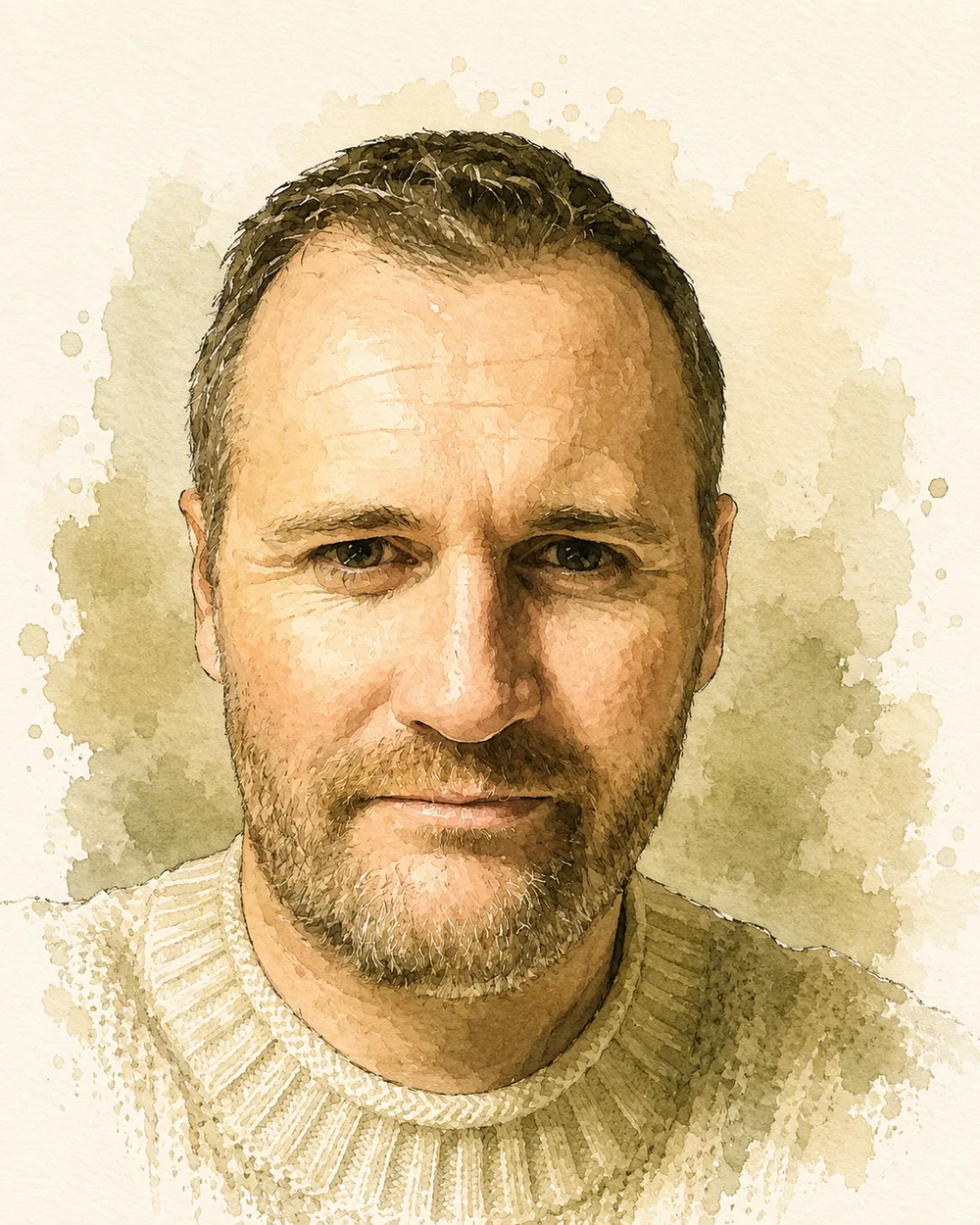
Every assessment in Stamford is carried out by Mark personally. He is a PATOSS-registered specialist assessor with fifteen years of experience working with children, young people and adults, and holds a current Assessment Practising Certificate (APC), working to the standards set by SASC.
He is a qualified teacher and former SENCo, which shapes how the reports are written, for the people who have to use them. You will not be allocated to an unknown assessor by a national company: you speak to Mark at enquiry, he carries out the assessment, and he writes the report.
More about MarkTaking the next step in Stamford
Tell us a little about the situation and we will reply within one working day. If you would rather talk it through first, a free 15-minute telephone call is often the easiest place to start.
Not sure yet? Try a free dyslexia indicator check.