I Can Read, So Could I Still Be Dyslexic?
Many adults assume dyslexia means being unable to read. In practice, adult reading is often accurate but slow, tiring and heavily dependent on re-reading. Here is how that is understood and assessed.
By Mark, specialist dyslexia assessor

You read every day. You get through emails, reports, contracts and the news. Nobody has ever suggested there is a problem. And yet reading anything long takes you much more effort than you suspect it should, you often reach the bottom of a page with very little of it retained, and you quietly dread documents that other people seem to skim.
So the question follows naturally. If you can read, could you still be dyslexic?
Accuracy is not the whole picture
Reading involves several things happening together. Recognising words accurately is one. Doing so quickly and automatically is another. Understanding and holding onto the meaning is a third. Someone can be strong on the first and still find the second and third genuinely hard work.
In fluent reading, word recognition happens without conscious attention, which leaves nearly all of your mental capacity free for meaning. When word recognition is less automatic, a share of your attention is constantly being spent on the words themselves. You still get them right, but there is less left over for the sense of the sentence. That is why you can read a paragraph correctly and arrive at the end with almost nothing retained.
What adults tend to describe
- Reading accurately but noticeably more slowly than people around you.
- Re-reading sentences or whole paragraphs to make them stick.
- Losing your place, skipping lines, or needing a finger or ruler on dense text.
- Reading being fine for a page or two and becoming much harder after that.
- Real tiredness or headaches after a long period of reading.
- Avoiding long documents, or reading only the summary and hoping it covers it.
- Preferring audio, video or a conversation to a written explanation.
- Struggling far more with unfamiliar names, technical terms and long words.
- Reading well when relaxed and much worse when tired, rushed or watched.
Reading aloud deserves a particular mention. Many adults read perfectly well silently and find reading aloud, in a meeting or to a child, disproportionately difficult. Reading aloud removes the option of re-reading, adds an audience and requires simultaneous decoding, pacing and expression.
Compensation, vocabulary and context
Adults are very good at compensating, and strong compensation is one reason dyslexia is missed for decades.
A large vocabulary and good general knowledge allow you to predict what a sentence is likely to say. In familiar material this works well and reading looks fluent. The strategy is real skill, not cheating. But it has limits. When the text is unfamiliar, technical, legal or deliberately precise, prediction stops helping and the underlying effort becomes visible again. Many adults notice this when they start a new job, begin a course or have to read something that matters.
Other adults compensate by working longer hours, reading things twice in advance of a meeting, or relying on colleagues to summarise. These are sensible adaptations, and they can hide a great deal.
How an assessment actually looks at reading
A diagnostic assessment does not tick off a list of traits. It looks at several dimensions of reading and at the underlying processes that support it, then considers how they fit together with your history.
- Accuracy: whether words, including unfamiliar ones, are read correctly.
- Fluency and rate: how quickly and smoothly reading happens, which is often where the difficulty appears in adults.
- Comprehension: how well meaning is taken in and held, including under timed conditions.
- Phonological processing: how efficiently you work with the sounds within words.
- Rapid naming: how quickly you retrieve familiar names for things, which relates closely to fluency.
- Working memory: how much you can hold and manipulate while reading or writing.
- Processing speed: how quickly routine written information is handled accurately.
- Spelling and written expression, which often show difficulty more clearly than reading in able adults.
None of these is read in isolation. What matters is the pattern across them, set against your educational and developmental history and your day to day experience. A profile where reasoning is strong and the processes underpinning literacy are markedly weaker is a very common picture in adults who were never identified.
A full assessment also reports strengths, which is often the part adults find most useful. If you want to know what the document itself contains, see what a dyslexia assessment report actually looks like.
A full assessment also reports strengths, which is often the part adults find most useful.
Other reasons reading can be slow or tiring
Slow reading is not proof of anything on its own. Several other explanations are common and need to be considered properly.
- Uncorrected or changing eyesight, which is always worth ruling out with an optometrist first.
- Visual discomfort with glare or dense print, which is a separate issue from dyslexia.
- Attention difficulties, where the words are fine but staying with the text is not.
- Anxiety, depression, exhaustion or long-term health conditions.
- Reading in a second or third language, or having had limited formal education in English.
- Disrupted schooling, or simply never having been taught to read with the structure that suited you.
Dyslexia is developmental, so the pattern should have a long history even if nobody named it. If comfortable reading became difficult only recently, that points elsewhere and is worth discussing with your GP.
When an assessment may help
Consider an assessment if the effort has been there as long as you can remember, if it is limiting your work or study, if you need evidence to support adjustments, or if you would simply like a clear and accurate account of how you read and process written language.
Assessment can be carried out face to face or, where appropriate, as a remote assessment. If you are not sure whether it is the right step, the free adult indicator check is a reasonable place to begin. It is not a diagnostic tool, but it can help you organise what you have noticed.
Related guides
Frequently asked questions
Can you be dyslexic if you read well?
Yes. In adults, dyslexia frequently shows itself through reading that is accurate but slow, effortful and tiring, with heavy reliance on re-reading and context, rather than through obvious errors. Fluency, comprehension under load and the underlying processing all matter alongside accuracy.
Does slow reading always mean dyslexia?
No. Eyesight, visual discomfort, attention difficulties, anxiety, fatigue, health conditions and reading in an additional language can all slow reading down. A proper assessment considers these alternatives rather than assuming a single explanation.
Why can I read but not remember what I have read?
If recognising words takes conscious effort, less attention is available for meaning, so comprehension and retention suffer even when every word was read correctly. Working memory also plays a part in holding earlier sentences while you read later ones.
Do adults with dyslexia get tested on reading aloud?
An assessment includes standardised reading tasks, some of which involve reading aloud, alongside silent reading, comprehension, spelling, writing and cognitive processing measures. The aim is a full picture rather than performance on any single task.
Should I see an optician before booking an assessment?
If you have not had a recent eye test, that is a sensible first step. Uncorrected vision and visual discomfort can affect reading, and ruling them out means any assessment findings are clearer.
About Defining Dyslexia and the author
About the author
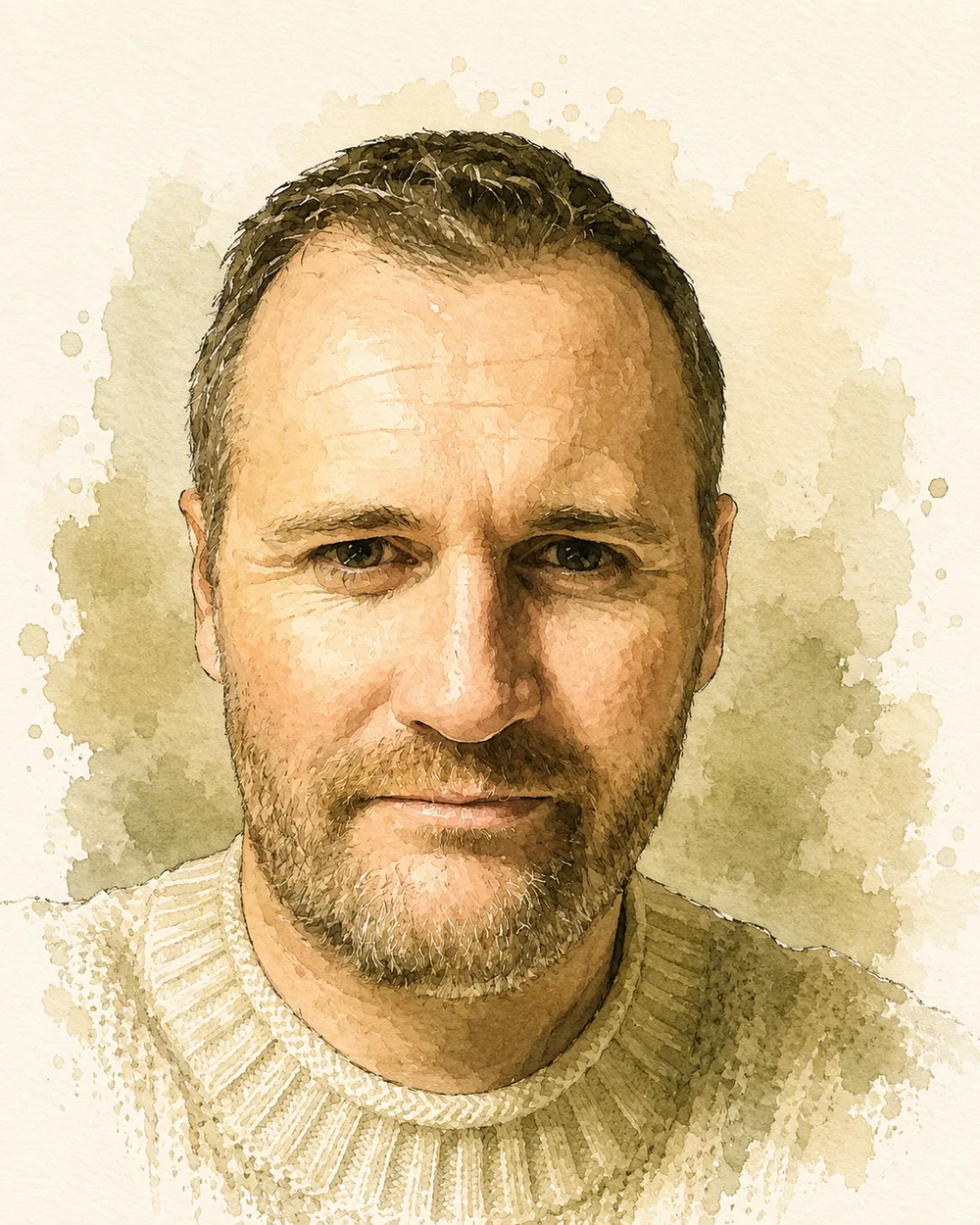
Mark
Specialist dyslexia assessor and founder of Defining Dyslexia
Mark is a qualified teacher and specialist assessor who has worked across mainstream and SEND education, including as a SENCo. He holds an Assessment Practising Certificate and is a member of PATOSS, and he carries out every Defining Dyslexia assessment personally, from the first conversation through to talking the report through with you.
- PATOSS member
- Assessment Practising Certificate
- PGCE
- NASENCo
- CPT3A
- PgDip SpLD
About Defining Dyslexia
Diagnostic dyslexia assessments for children, adults and students
Defining Dyslexia provides full diagnostic SpLD assessments for children, adults and university and college students. Face-to-face assessments are available in Sheffield and South Yorkshire, Peterborough and Cambridgeshire, and Stamford and Rutland, with remote assessments available UK-wide. Every assessment includes time to talk through the findings together, so you leave with a clear understanding of the results rather than a document to decipher alone.
If you have questions, or you are wondering whether an assessment might be the right next step, a free 15-minute telephone call is available with no obligation.