
My Child Is Falling Behind in Reading: What to Do First
A calm order of first steps for parents worried about reading: what to ask school, what to rule out, how to judge progress, and when a specialist assessment might help.
By Mark, specialist dyslexia assessor
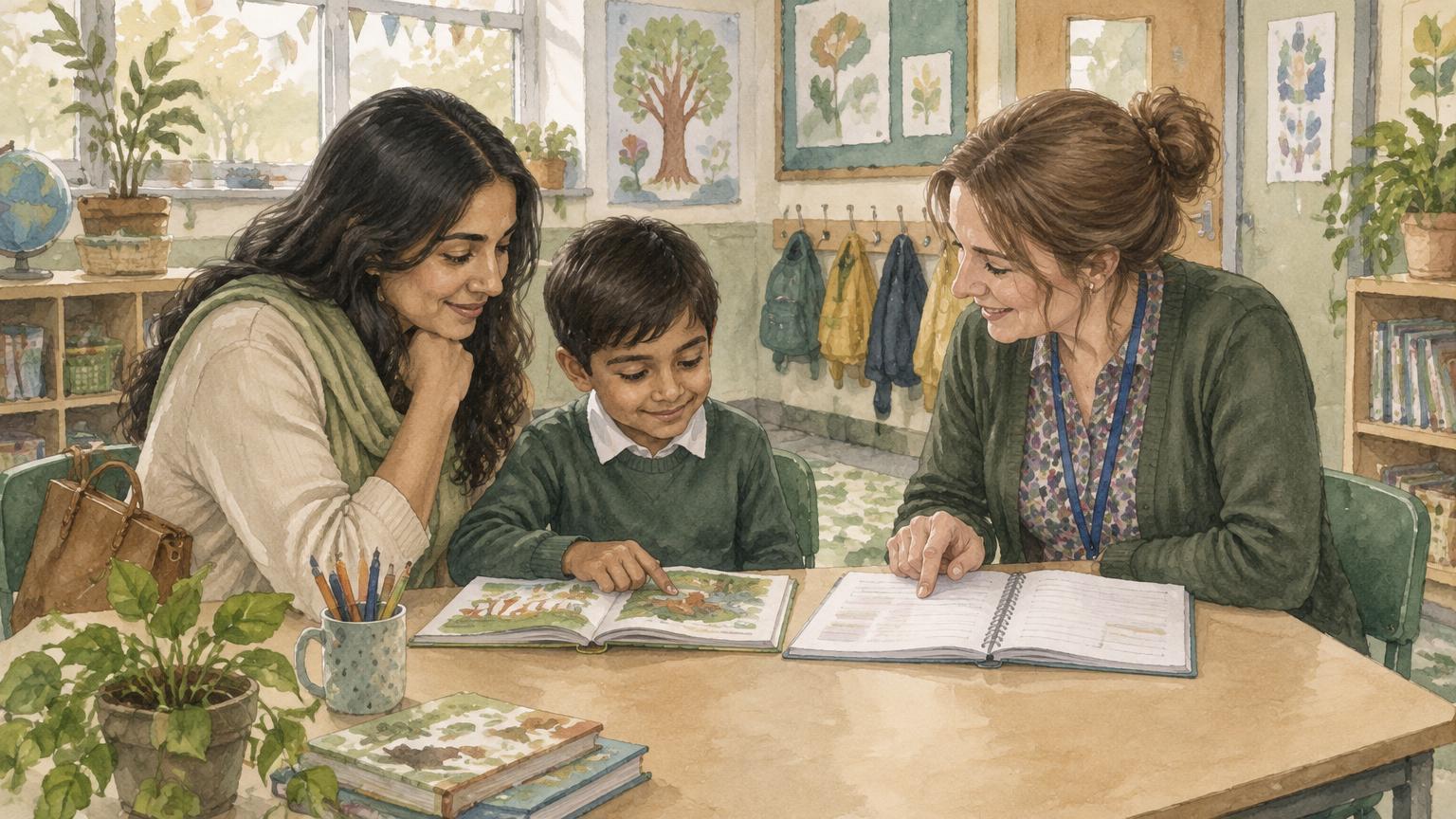
Perhaps a reading record has come home with the same book for weeks. Perhaps a teacher has mentioned that your child is below the expected level, or you have noticed friends reading more fluently. However it reached you, the worry is real.
The good news is that there is a sensible order to work through. Most reading difficulties respond to good teaching and the right support, and you do not need to have an answer straight away.
Falling behind does not always mean dyslexia
Children learn to read at different rates. A child may be behind because of missed or disrupted schooling, a late start with phonics, learning English as an additional language, a period of illness, anxiety, attention difficulties, or simply because they are among the youngest in the year. Dyslexia is one possibility, but it is not the only one, and it should not be the first assumption.
Step 1: Talk to the class teacher
Ask for a short, calm conversation rather than raising it at the school gate. Useful questions include:
- Where is my child with reading compared with what you would expect for their age?
- Which parts are hardest: sounding out words, recognising common words, reading fluently, or understanding what they read?
- Is this similar to what you see in writing and spelling?
- Is there anything you are already doing to help?
Share what you see at home too. Our guide on when school and home see different things explains why both views matter.
Step 2: Check eyesight and hearing
A routine sight test with an optometrist and, where there are concerns, a hearing check through your GP or school nurse are sensible early steps. These checks do not test for dyslexia, but they can rule out something simple that makes reading harder. A sight test is free on the NHS for children under 16.
Step 3: Understand the teaching and support
Ask what reading teaching your child receives day to day, and whether they are getting any extra help. In many primary schools this may include additional phonics sessions, small-group reading or a structured intervention. Find out:
- what the support is and how often it happens
- how long it will run before progress is reviewed
- how progress will be measured and shared with you
- whether your child is on the school's SEN register and has a support plan
Schools in England use a cycle of assess, plan, do and review for pupils who need additional support. It is reasonable to ask when the next review will be and to be included in it.
Schools in England use a cycle of assess, plan, do and review for pupils who need additional support.
Step 4: Support reading at home, gently
Short, positive reading time helps more than long, tense sessions. Read to your child as well as with them, so they keep enjoying stories and building vocabulary. Our guide to helping your child at home has practical ideas. If reading has become a battle, see My Child Avoids Reading and Why Does Reading Leave My Child Exhausted?.
Step 5: Review progress over time
Give targeted support a fair chance, usually at least a term, then look at what has changed. Some children make rapid progress once the right help is in place. That is useful information in itself.
When to consider a specialist assessment
A specialist assessment may be worth considering when:
- difficulties persist despite good teaching and well-delivered intervention
- progress is much slower than expected compared with how your child understands and talks about ideas
- spelling and writing are also persistently difficult
- there is a family history of similar difficulties
- your child's confidence or wellbeing is being affected
An assessment looks at the wider pattern and considers other explanations. It may identify dyslexia, or it may show that something else better explains the difficulties. Both outcomes help plan the right support.
A calm next step
If you would like to think through the pattern you are seeing, try the free child dyslexia indicator check. You can read about dyslexia assessments for children, or book a free 15-minute call to talk it through without obligation.
Frequently asked questions
Does falling behind in reading mean my child is dyslexic?
Not necessarily. Many factors can affect reading progress, including teaching, attendance, language, attention and confidence. Dyslexia is one possibility when difficulties persist despite good support.
Should I get my child's eyes tested?
Yes, a routine sight test is a sensible early step, and it is free on the NHS for children under 16. It will not identify dyslexia, but it can rule out a vision difficulty that makes reading harder.
How long should I wait before considering an assessment?
There is no fixed rule. It is usually sensible to give targeted support at least a term and review progress. If difficulties persist despite good support, or your child's wellbeing is affected, an assessment may be worth discussing.
What should I ask my child's school?
Ask where your child is compared with age expectations, which parts of reading are hardest, what support is in place, how often it happens and when progress will be reviewed with you.
Can school diagnose dyslexia?
Schools can identify difficulties and provide support, and some use screeners, but a diagnosis of dyslexia requires a diagnostic assessment by a suitably qualified specialist assessor or psychologist.
About Defining Dyslexia and the author
About the author
Mark
Specialist dyslexia assessor and founder of Defining Dyslexia
Mark is a qualified teacher and specialist assessor who has worked across mainstream and SEND education, including as a SENCo. He holds an Assessment Practising Certificate and is a member of PATOSS, and he carries out every Defining Dyslexia assessment personally, from the first conversation through to talking the report through with you.
- PATOSS member
- Assessment Practising Certificate
- PGCE
- NASENCo
- CPT3A
- PgDip SpLD
About Defining Dyslexia
Diagnostic dyslexia assessments for children, adults and students
Defining Dyslexia provides full diagnostic SpLD assessments for children, adults and university and college students. Face-to-face assessments are available across our local service areas in South Yorkshire, Chesterfield and surrounding Derbyshire, Wakefield, Peterborough, Stamford, Rutland, Grantham and South Lincolnshire, with remote assessment available UK-wide. Every assessment includes time to talk through the findings together, so you leave with a clear understanding of the results rather than a document to decipher alone.
If you have questions, or you are wondering whether an assessment might be the right next step, a free 15-minute telephone call is available with no obligation.