Where we assess
Dyslexia assessments across South Yorkshire, Peterborough and UK-wide
Defining Dyslexia works from two bases. Sheffield in the north and Peterborough in the east, travelling to families across the surrounding areas. Remote assessments are available anywhere in the UK and meet exactly the same standards.
£495 including the full written report
Children from age 8, adults and students
Mark, PATOSS-registered assessor
Step by step
Your assessment journey
From the first conversation through to your report and follow-up support, each stage is explained clearly. You will deal directly with the same assessor throughout.
- Initial conversation: discuss your concerns with no obligation.
- Choose and book: agree the right service, appointment and assessment method.
- Background information: complete the relevant forms and share any useful information.
- The assessment: a supportive one-to-one session, usually lasting two to three hours.
- Scoring and analysis: results and background information are considered together.
- Feedback and written report: the findings are explained clearly and followed by a comprehensive report.
- Support and next steps: practical recommendations and reasonable follow-up support.
Face-to-face that comes to you
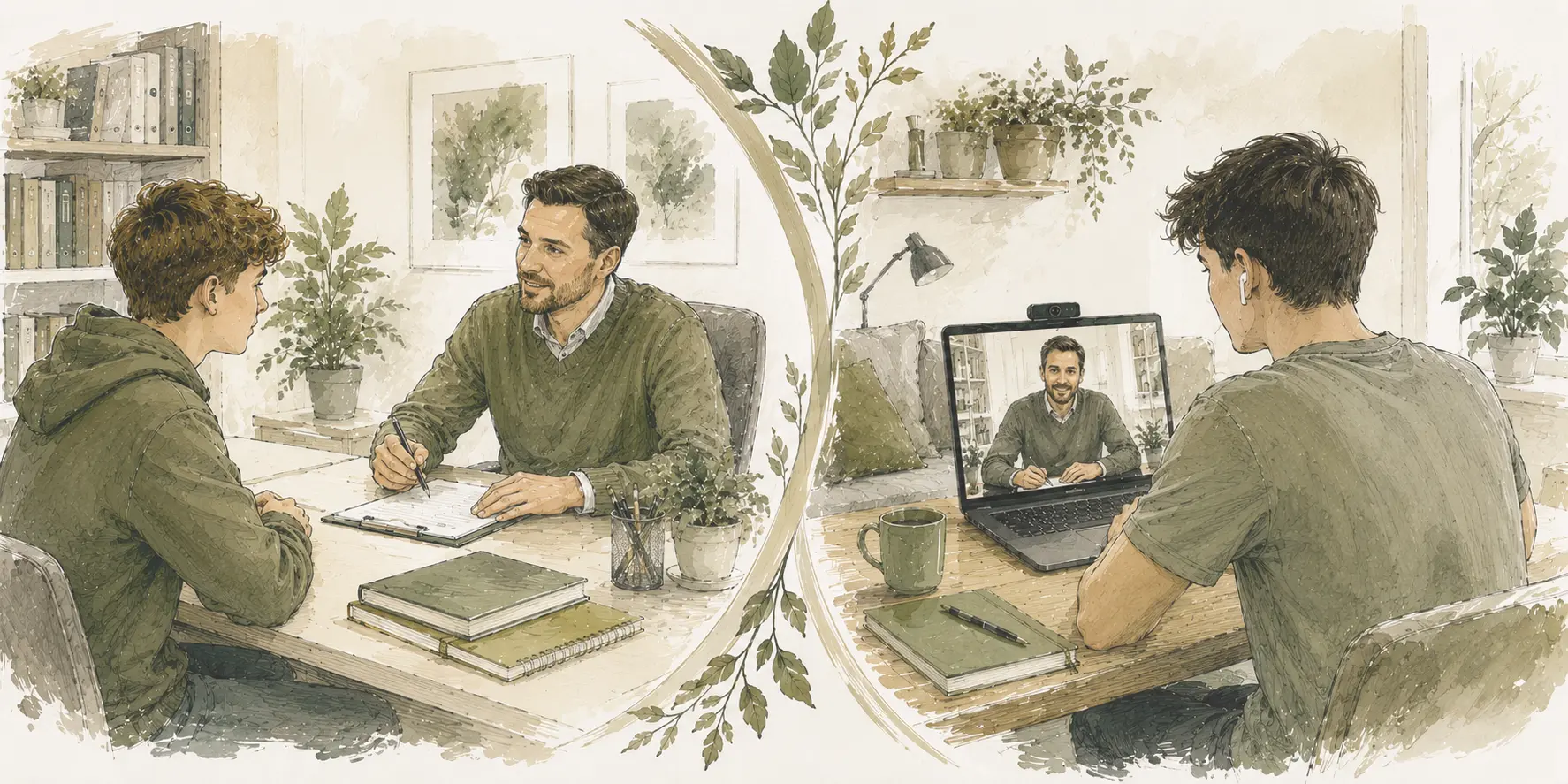
Assessment shouldn't add another journey to the week. Within the face-to-face service areas Mark travels to you, and remote assessment is available UK-wide.
- At home
- At school
- An agreed setting
- Remotely
Availability depends on location and on the room being quiet and suitable, so it is worth asking early. There is no assessment centre to visit.
Northern hub
Sheffield and South Yorkshire
Sheffield is the base for assessments across South Yorkshire and into north Derbyshire. Appointments take place at home, at school where the school agrees, or at a local venue. There is no assessment centre, because travelling to the family is usually kinder for a child than an unfamiliar clinic.
Sheffield
Sheffield city centre · Hillsborough and the north · Ecclesall and the south-west · Stocksbridge
View areaDoncaster
Doncaster town centre · Mexborough · Conisbrough · Thorne and Moorends
View areaBarnsley
Barnsley town centre · Penistone · Wombwell · Hoyland
View areaRotherham
Rotherham town · Maltby · Wickersley · Kiveton Park
View areaChesterfield & the Peak District
Chesterfield · Dronfield · Staveley · Bolsover
View areaEastern hub
Peterborough, Cambridgeshire and the borders
Peterborough covers the city and the surrounding villages, reaching north into Lincolnshire and west into Rutland. Rural families across this area often choose remote assessment simply because it removes a long journey.
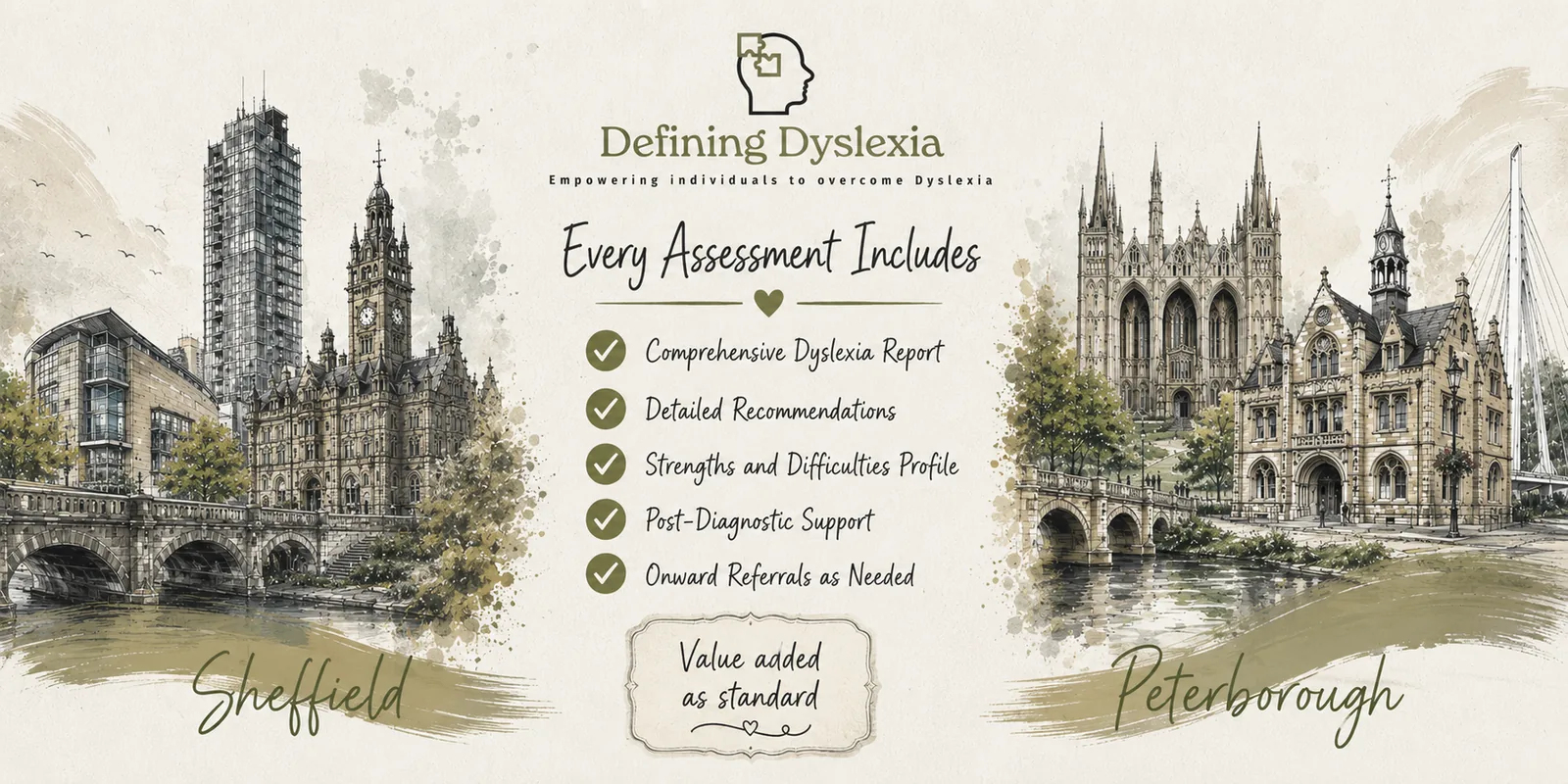
Every assessment includes: a comprehensive dyslexia report; detailed recommendations; a strengths and difficulties profile; post-diagnostic support; and onward referrals as needed.
Anywhere else
Remote assessments, UK-wide
If you are outside these areas, a remote assessment is a genuinely equivalent option. It runs over a secure video platform, follows the same SASC standards, and produces the same diagnostic report.
About remote assessmentsNot sure where to start?
A free 15-minute telephone call is often the easiest first step, no obligation, and you will speak to Mark rather than a call handler.
Book a free 15-minute telephone callCommon questions
What an assessment involves, answered
The questions people ask most often before booking, whether the assessment is for a child, for a student or for themselves.
01What is a dyslexia assessment and what does it involve?
A dyslexia assessment is a detailed, one-to-one evaluation carried out by a qualified specialist assessor. It looks at reading, spelling, writing speed, phonological processing and memory, and builds a picture of how you or your child thinks, learns and processes information. Most assessments take around two to three hours and conclude with a comprehensive written report containing practical recommendations.
02Can my GP refer me for a dyslexia assessment?
No. Dyslexia is not a medical condition and is not diagnosed or referred through the NHS. A formal diagnostic assessment is carried out by a qualified specialist assessor, such as a PATOSS-registered practitioner holding a current Assessment Practising Certificate. Defining Dyslexia provides exactly that, independently and without a GP referral.
Read the full guide: Do you need a GP referral for a dyslexia assessment?03How much does a dyslexia assessment cost?
A full diagnostic dyslexia assessment with Defining Dyslexia costs £495. That includes the assessment session and the comprehensive written report with practical recommendations. There are no hidden costs. Where an adult assessment includes screening for co-occurring difficulties such as ADHD traits or dyspraxia, any additional fee is always discussed and agreed at enquiry stage.
Read the full guide: How much does a dyslexia assessment cost, and is it worth it?04How is an assessment different from a screening test?
A screening tool can flag whether dyslexia traits are present, but it cannot give a formal diagnosis, a detailed cognitive profile or a report that schools, universities, exam centres and employers can work from. A full diagnostic assessment goes considerably further. If you are not sure which you need, get in touch and Mark will say so honestly, including when an assessment is not the right next step.
Read the full guide: Dyslexia test or dyslexia assessment: what's the difference?05Can the assessment identify other conditions as well as dyslexia?
Defining Dyslexia specialises in dyslexia and related specific learning difficulties. Screening for co-occurring difficulties such as ADHD traits or dyspraxia can be included in an adult assessment where relevant, and this is discussed at enquiry stage. Defining Dyslexia does not formally diagnose ADHD, autism or DCD. Where a full assessment of that kind is needed, Mark can advise on appropriate referral routes.
Read the full guide: Dyslexia and ADHD: when they travel together06How long does it take to get an appointment?
Waiting times are usually under two months and are often considerably shorter. Remote assessments can frequently be arranged more quickly than face-to-face appointments. Get in touch to discuss current availability.
Read the full guide: How long does a dyslexia assessment take to book?07What happens after the assessment?
Every assessment finishes with time set aside to talk the findings through together, so you leave understanding the results rather than waiting for a document to decipher. The written report follows, with detailed recommendations for education, work or everyday life, and Mark is available to answer questions once you have read it.
Read the full guide: What happens after a dyslexia assessment: a guide for parents08Is the report recognised by schools, universities and employers?
Reports are written to SASC standards by an assessor holding a current Assessment Practising Certificate, which is the form of evidence schools, colleges, universities, exam centres and employers normally ask for. Each body still applies its own rules, so a report supports an application for exam access arrangements, DSA or workplace adjustments rather than guaranteeing the outcome.
Read the full guide: What does a dyslexia assessment report actually look like?