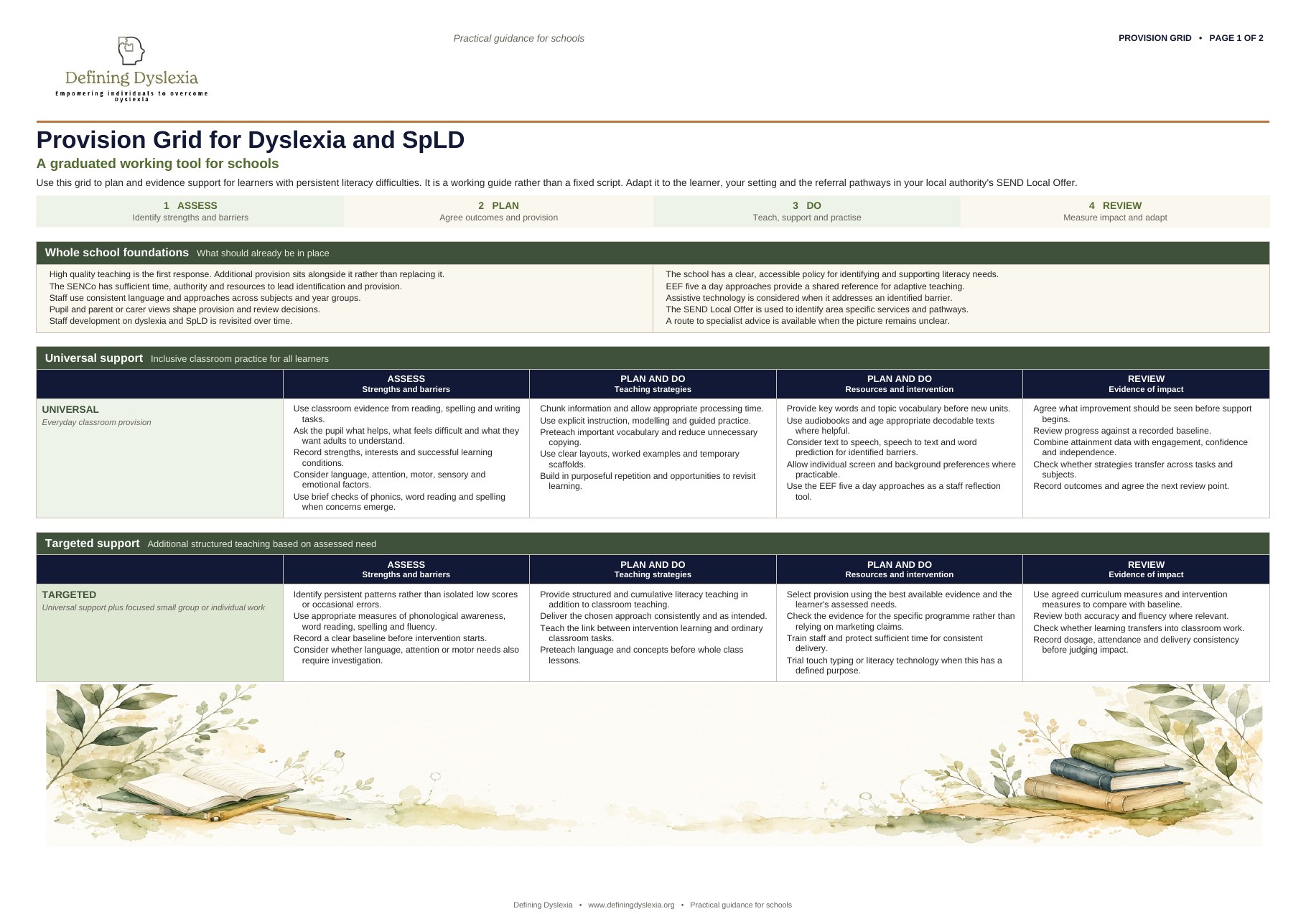
Our practical quick guides explain common areas of need and provide realistic strategies that can be used at school and at home. They are designed to support early understanding, classroom discussion and conversations with a SENCo.
Each one is a free dyslexia guide for schools and families in plain English: what the area of need is, how it may look day to day, and what tends to help. Between them they cover classroom practice for dyslexia support for teachers, ADHD classroom strategies, working memory strategies for pupils, auditory processing and listening demands, and attention and concentration strategies, so they work equally well as SEND resources for families and SENCos preparing for a review meeting.
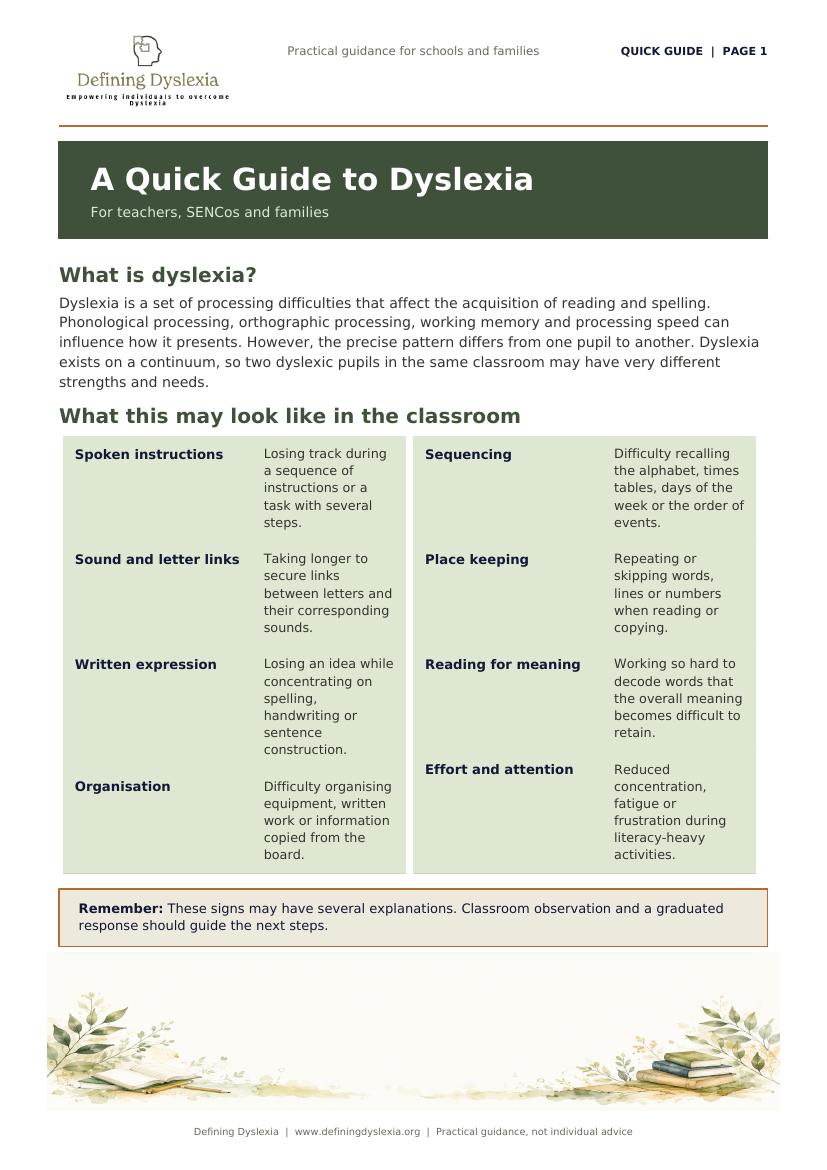
Teachers, SENCos and families · PDF
A Quick Guide to Dyslexia
An accessible introduction to dyslexia, how it may present in the classroom and practical strategies that can reduce barriers to learning.
Teachers, SENCos and families · PDF
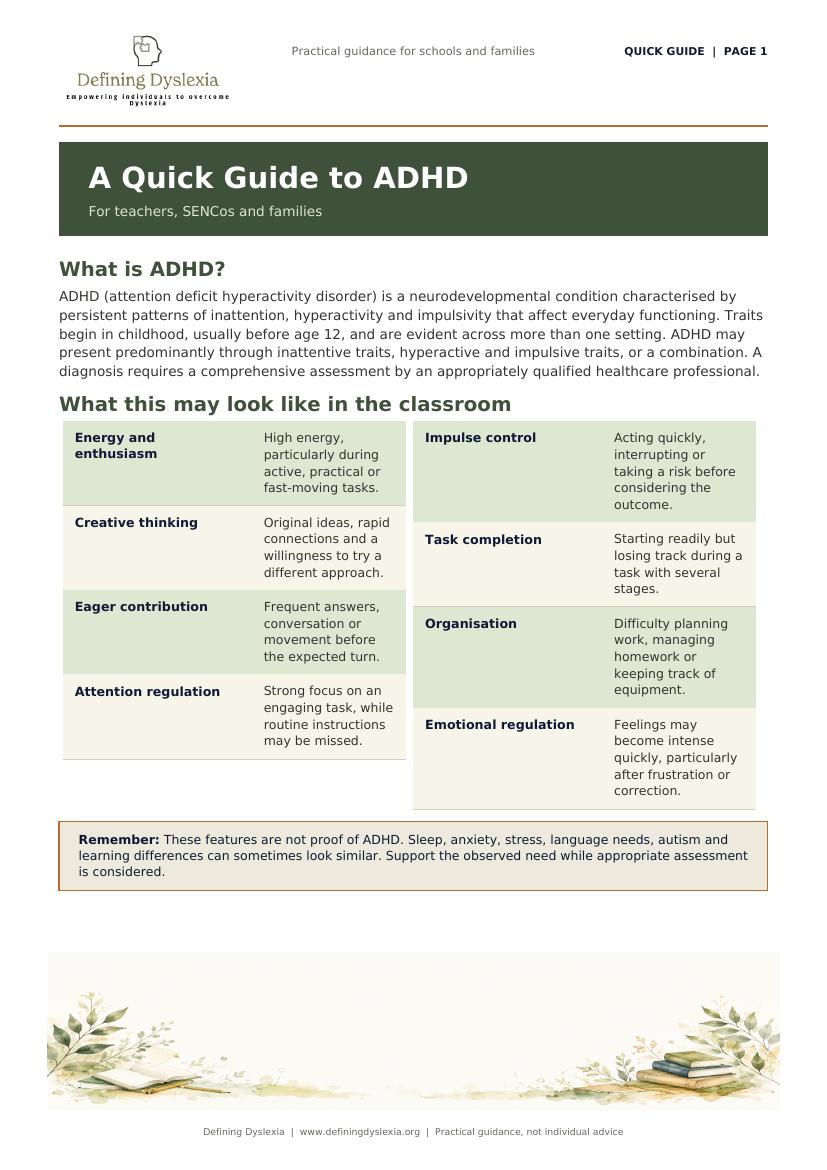
A Quick Guide to ADHD
A practical guide to how ADHD traits may present at school, alongside supportive approaches for attention, organisation, emotional regulation and classroom participation.
Teachers, SENCos and families · PDF
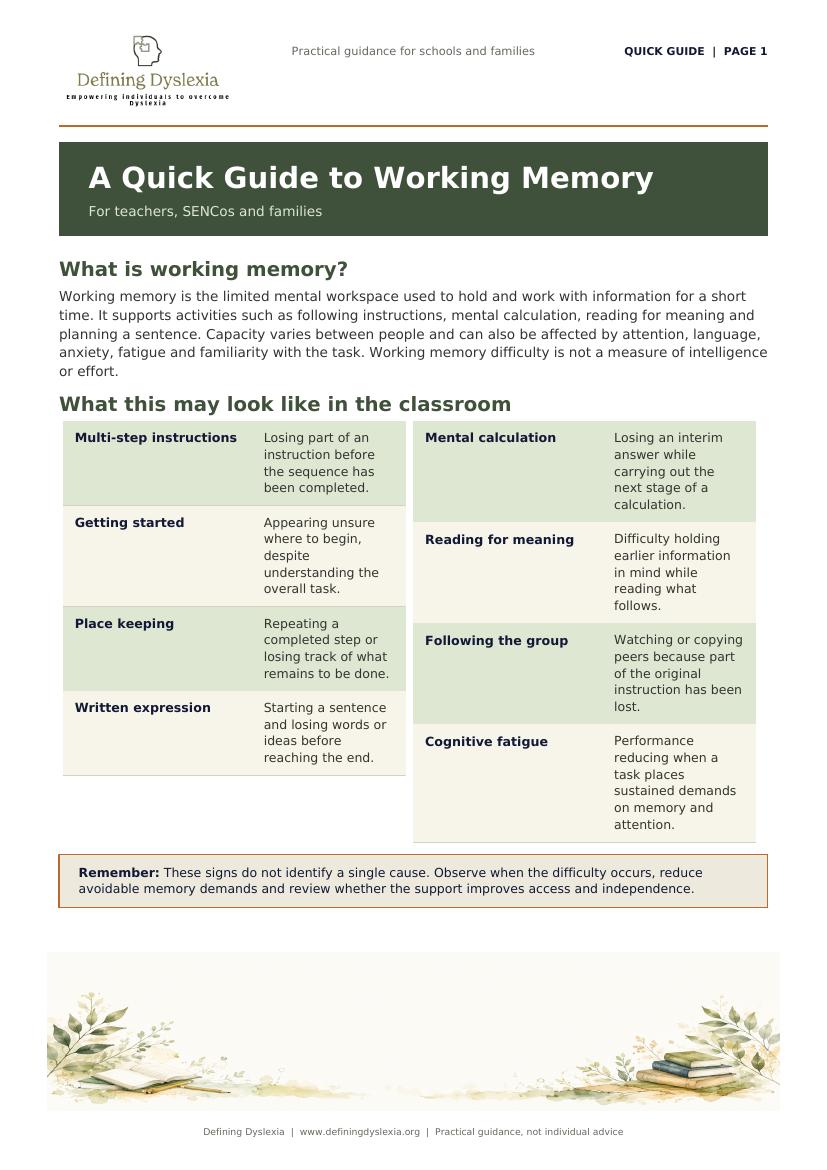
A Quick Guide to Working Memory
A clear explanation of working memory, how difficulties may affect everyday learning and practical ways to reduce unnecessary memory demands.
Teachers, SENCos and families · PDF
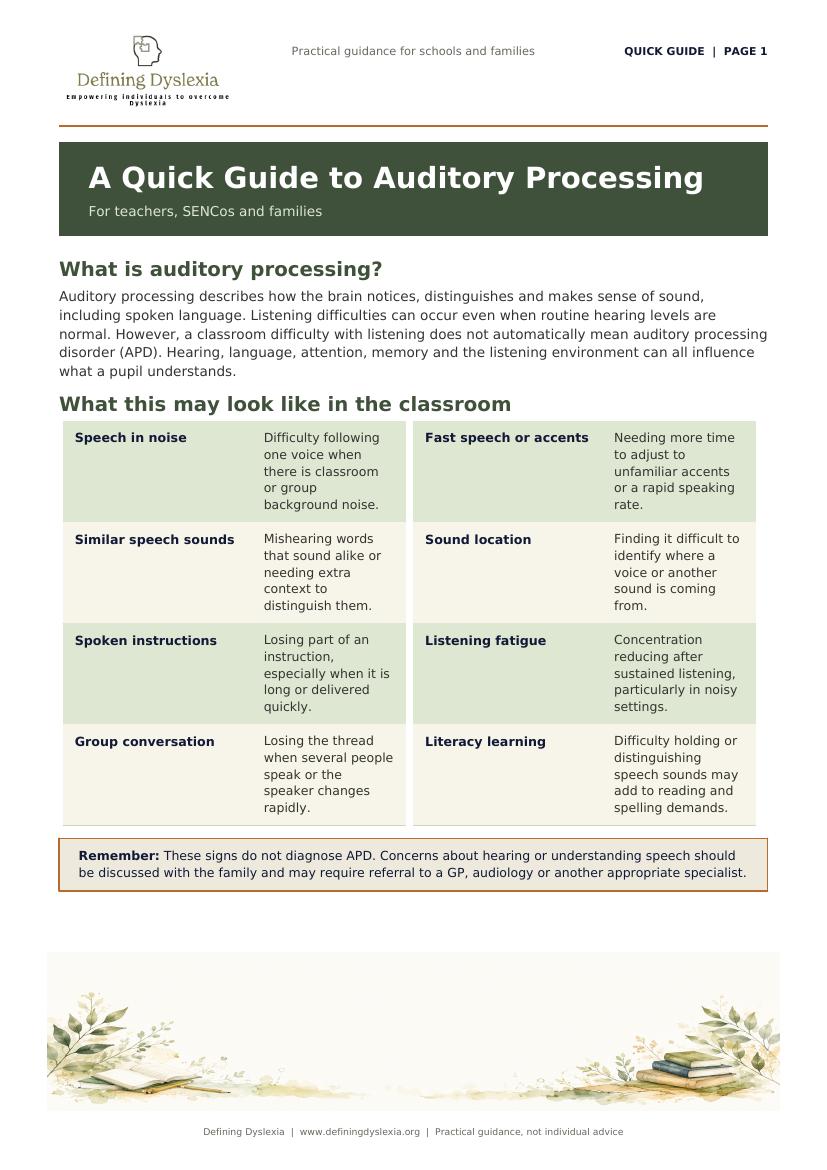
A Quick Guide to Auditory Processing
Understand the signs of auditory processing difficulties, their possible causes and practical ways to reduce listening demands. This guide also explains when specialist hearing advice may be appropriate.
Teachers, SENCos and families · PDF
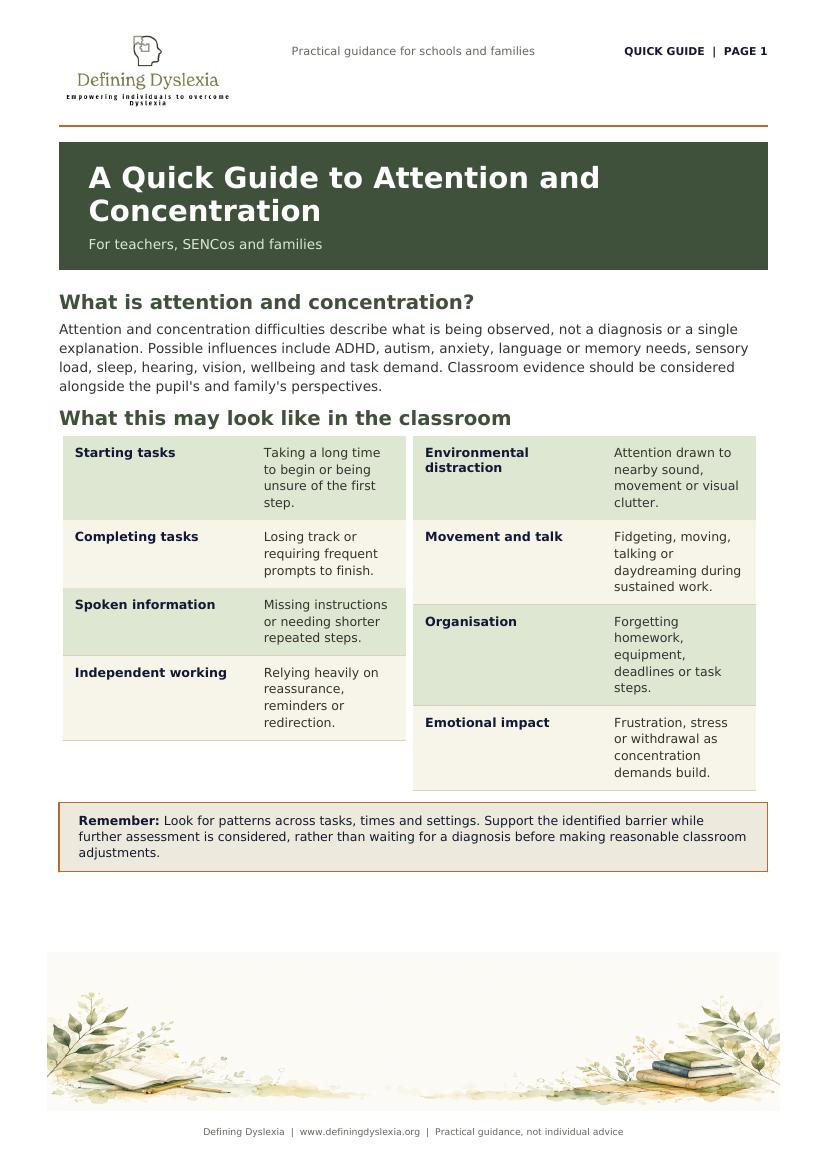
A Quick Guide to Attention and Concentration
Explore common signs of attention and concentration difficulties, possible contributing factors and practical strategies for school, home, study and work.
These are practical guidance documents, not assessments. The ADHD guide is not a diagnostic tool: educational ADHD traits screening looks at how traits present in learning and is not a medical diagnosis, which only an appropriately qualified healthcare professional can make. Attention and concentration difficulties described in the guides are observations, not diagnoses. Auditory processing difficulties are not automatically auditory processing disorder: Defining Dyslexia does not diagnose auditory processing disorder or replace an audiology assessment, and the guide explains when specialist hearing advice may be appropriate. Identifying dyslexia does not in itself guarantee an EHC plan, exam access arrangements or any other outcome; those decisions rest with the school, exam centre or relevant body.
The guides are written by Mark, a specialist assessor registered with PATOSS who holds a current Assessment Practising Certificate.
Would you like help understanding the next steps?
Defining Dyslexia provides diagnostic dyslexia assessments, educational ADHD traits screening and support for schools, families, young people and adults.