Organisation Difficulties: When Being Told to Try Harder Does Not Help
Lost books and unfinished homework can reflect executive functioning demands, not a lack of care. Build external supports that fit the learner’s real day.
By Mark, specialist dyslexia assessor
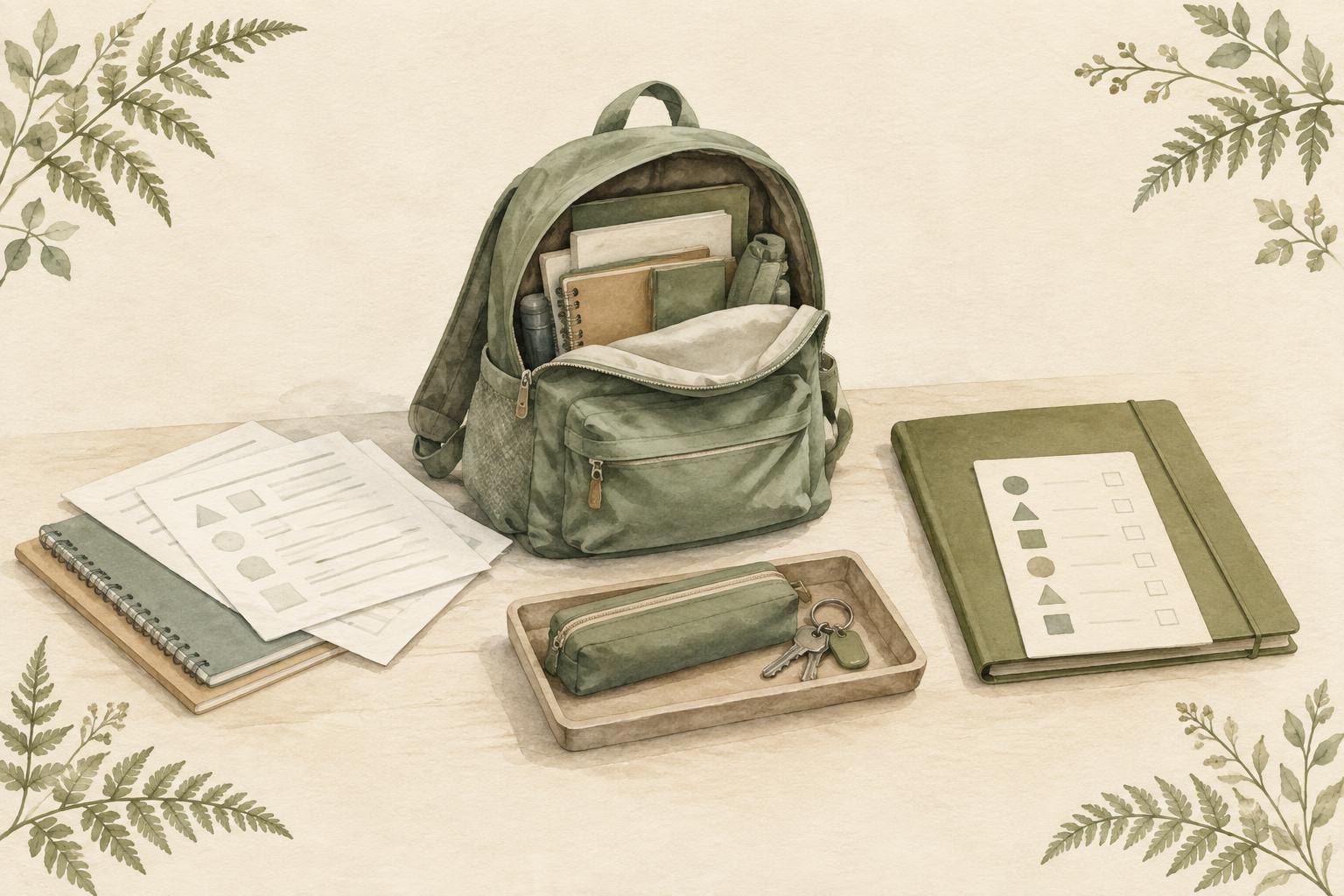
Another lost worksheet. A forgotten PE kit. Homework completed but not handed in. “Be more organised” names the result adults want, but it does not show a learner how to get there. A workable system needs to fit the places, materials and transitions involved.
Organisation is a process, not a tidy appearance
Managing homework may involve noticing it was set, recording it, bringing the materials home, completing it, returning it and handing it in. These are separate stages. A problem at the final stage does not mean the child failed to do the work.
Organisation draws on planning, working memory, attention and checking. Reading effort, unclear instructions, unfamiliar routines or too many storage places may add difficulty. Some dyslexic learners find organisation hard, but others do not; losing things is not diagnostic of dyslexia or ADHD.
Find where the chain breaks
- Does the learner know where homework information is recorded?
- Can they access and understand that record later?
- Are the materials available in the place they will work?
- Is there one clear place for finished work?
- Is handing it in prompted, or assumed to happen without support?
Ask the child to describe or show what happens. Keep the conversation neutral. “The sheet did not make it into the folder” is more useful than “You never take responsibility”. The learner may already be working hard to remember.
Put support at the point where it is needed
- Use one agreed folder for work travelling between home and school, with a simple distinction between work to do and work to return.
- Give essential belongings a consistent home, such as a hook or tray, and practise putting them there.
- Place a short bag checklist beside the packing spot. Use words, pictures or both, according to the learner’s needs.
- Attach a check to an existing transition: before leaving a room, check the desk and the next required materials.
- Avoid buying several new apps, diaries and folders at once. One used system is better than several abandoned ones.
A learner may need an adult to demonstrate the routine and practise alongside them. Make the routine achievable before expecting independent use. A messy-looking desk can still be functional; the question is whether the person can find and use what they need.

Make multi-step instructions recoverable
Spoken instructions disappear once said. A child may remember “get your book” but lose the next steps while finding it. Give a short written or visual sequence, pause between stages and ask what they will do first. Do not make repeating the full instruction a test of listening.
Written support must itself be accessible. A crowded page of instructions can create another barrier. Read more about working memory and why spoken instructions can be difficult to retain. The latter focuses on adults, but its distinction between hearing, understanding and retaining information is useful here too.
Agree a shared plan with school
Home and school may each have systems that make sense locally but conflict with each other. Ask the teacher or SENCo to agree a manageable routine and who will prompt each stage. Include the learner in deciding what they can realistically use.
- Choose one priority, such as returning completed homework, rather than fixing everything at once.
- Agree a discreet prompt or checking point, not public reminders that embarrass the child.
- Check that digital homework and hand-in systems are accessible and consistently explained.
- Review whether fewer items are lost and less time is spent searching.
- Keep support where it is needed rather than withdrawing it simply because a checklist exists.
Schools can put support in place without a formal diagnosis. A report may inform support but does not automatically secure exam access arrangements or an EHCP. Our guide to discussing and reviewing support with school develops that conversation.
Choose the next step that fits the concern
For difficulties with the beginning of work, read helping a child get started. Where persistent reading and spelling difficulties are also present, child dyslexia assessment guidance explains what that assessment explores. Organisation difficulties alone are a reason to understand the barriers, not automatically to purchase an assessment.
Explore the executive functioning series
- Part 1: What Is Executive Functioning and Why Does It Matter?
- Part 2: My Child Knows What to Do but Cannot Get Started
- Part 3: Why Do I Leave Everything Until the Last Minute?
- Part 4: Organisation Difficulties: When Being Told to Try Harder Does Not Help — this guide
- Part 5: Executive Functioning at Work: Why Everyday Tasks Can Feel So Difficult
- Part 6: Dyslexia, ADHD and Executive Functioning: Understanding the Differences
Frequently asked questions
Is a diary enough to solve organisation difficulties?
Only if the learner can record information, find it again and act on it. Teach the routine and check the points where it breaks down. The diary is a tool, not the whole support.
Should school wait for a diagnosis before helping?
No. Schools can put support in place without a formal diagnosis. Specific observations and a shared plan can guide useful changes now.
Does losing things mean my child has dyslexia?
No. Organisation difficulties have many possible explanations. Consider the broader pattern, the environment and any literacy concerns rather than using one behaviour as a diagnostic sign.
About Defining Dyslexia and the author

About the author
Mark
Specialist dyslexia assessor and founder of Defining Dyslexia
Mark is a qualified teacher and specialist assessor who has worked across mainstream and SEND education, including as a SENCo. He holds an Assessment Practising Certificate and is a member of PATOSS, and he carries out every Defining Dyslexia assessment personally, from the first conversation through to talking the report through with you.
- PATOSS member
- Assessment Practising Certificate
- PGCE
- NASENCo
- CPT3A
- PgDip SpLD
About Defining Dyslexia
Diagnostic dyslexia assessments for children, adults and students
Defining Dyslexia provides full diagnostic SpLD assessments for children, adults and university and college students. Face-to-face assessments are available across our local service areas in South Yorkshire, Chesterfield and surrounding Derbyshire, Wakefield, Peterborough, Stamford, Rutland, Grantham and South Lincolnshire, with remote assessment available UK-wide. Every assessment includes time to talk through the findings together, so you leave with a clear understanding of the results rather than a document to decipher alone.
If you have questions, or you are wondering whether an assessment might be the right next step, a free 15-minute telephone call is available with no obligation.