

My child is nervous about a dyslexia assessment: how can you help?
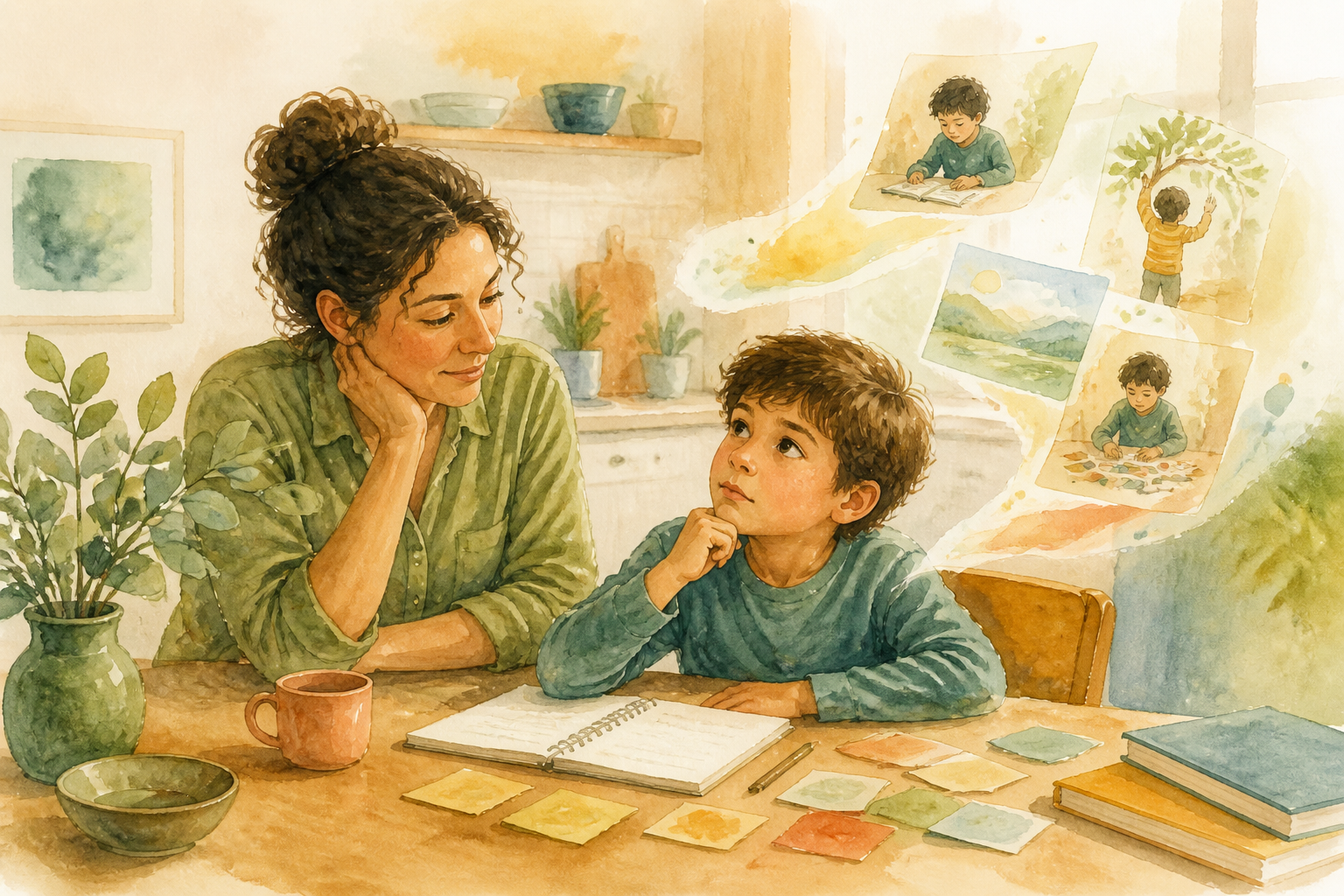
Meeting someone new can feel daunting. Here is how I help children and young people become familiar with me and plan an assessment around their needs.
Read the articleKnowledge Centre topic

Guidance for parents and carers: what dyslexia can look like at home and at school, when to act, and how to make sense of what you are seeing.
Articles

Meeting someone new can feel daunting. Here is how I help children and young people become familiar with me and plan an assessment around their needs.
Read the article

Strong spelling can sit alongside slow, effortful reading or difficulty getting ideas onto paper. One skill cannot rule dyslexia in or out; the wider pattern matters.
Read the article

A missing book, another drink, one more reason to leave the table: reading avoidance can be preference, tiredness, low confidence or genuine difficulty. The pattern offers useful clues.
Read the article

A calm order of first steps for parents worried about reading: what to ask school, what to rule out, how to judge progress, and when a specialist assessment might help.
Read the article
A change of plan can bring some children to a complete halt. This is rarely stubbornness. Cognitive flexibility, uncertainty and the effort of re-planning all play a part — and there is a lot parents and schools can do.
Read the article

Some children clearly know the answer but need much longer to get it out. Slow response is not the same as low ability. Processing speed, word retrieval, working memory and anxiety can all play a part.
Read the article

"If they can concentrate on Minecraft for three hours, they can concentrate on their homework." It feels logical, but attention does not work like that. Here is why — and how to borrow what games do well.
Read the article
They can name every dinosaur but not remember this week's spellings. It is not selective forgetting. Meaning, prior knowledge, interest and repetition make some memories far stronger than others.
Read the article

Memory, processing time, writing, attention, change and anxiety can all be part of a wider learning profile — or have other explanations. Why it helps to look at the pattern, not one difficulty in isolation.
Read the article

Dyslexia is different for everyone, so there is no single list of things that always works. These are practical ideas a child or young person can try, and keep only if they genuinely help.
Read the article
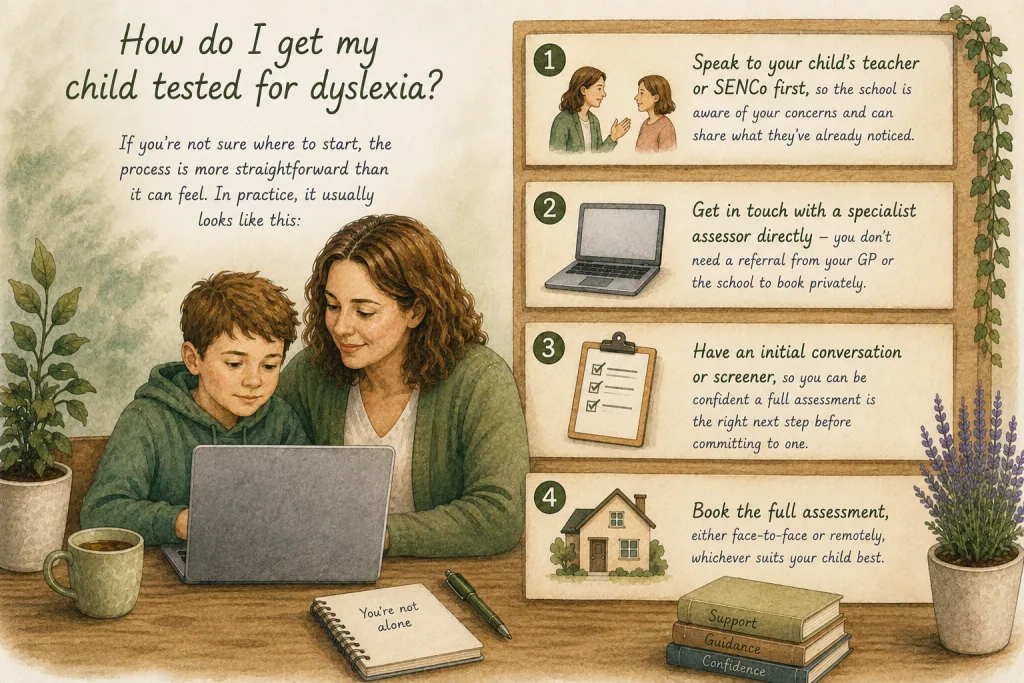
Your child can read the words, but afterwards they are wiped out. Accuracy alone does not show how automatic or sustainable reading has become. Here is what may be happening and what helps.
Read the article
A child can genuinely understand something and still struggle to retrieve it later. Working memory, cognitive load, attention and automaticity can all affect how reliably learning is available when it is needed.
Read the article
A thoughtful verbal answer can become only a few written sentences because writing places many demands on the brain at once. The gap may reflect a bottleneck in written production, not limited knowledge or ability.
Read the article
Home education can be the right choice for a child and still leave the question of dyslexia unanswered. Understanding your child's learning profile can be valuable however they learn.
Read the article
Small amounts of the right support at home can make a real difference. Practical ideas for reading, spelling, KS2 and homework — with confidence at the centre.
Read the article
“They seem fine at school.”
Read the article
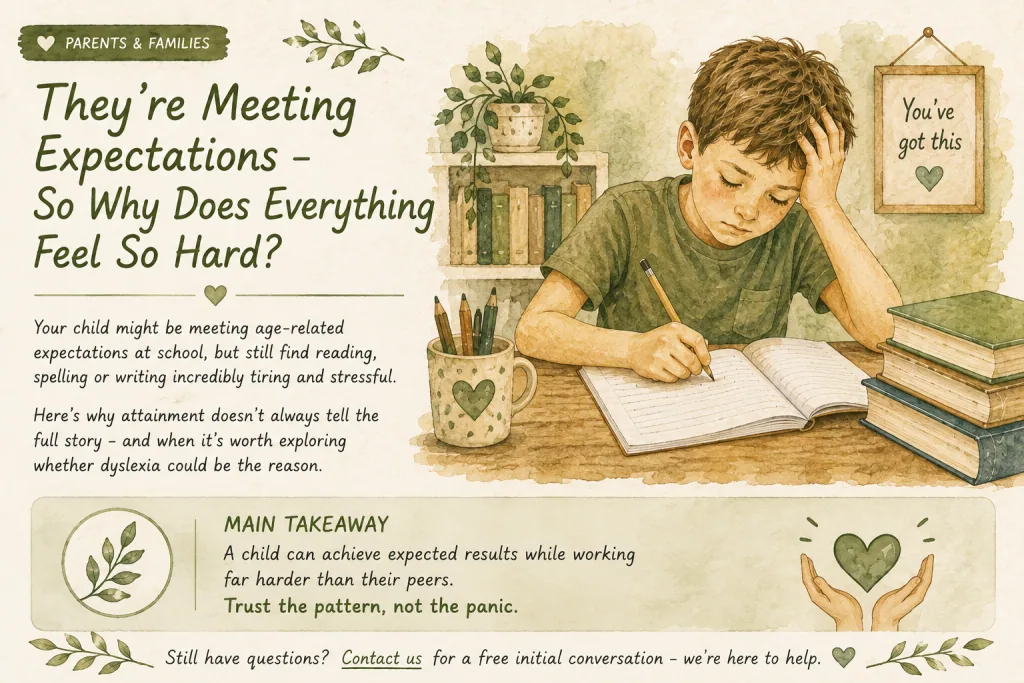
Your child is meeting expectations at school.
Read the article
Most people don't wake up one day and decide, out of nowhere, to look into a dyslexia assessment. Something usually prompts it. The trouble is, the moments people wait for aren't always…
Read the article
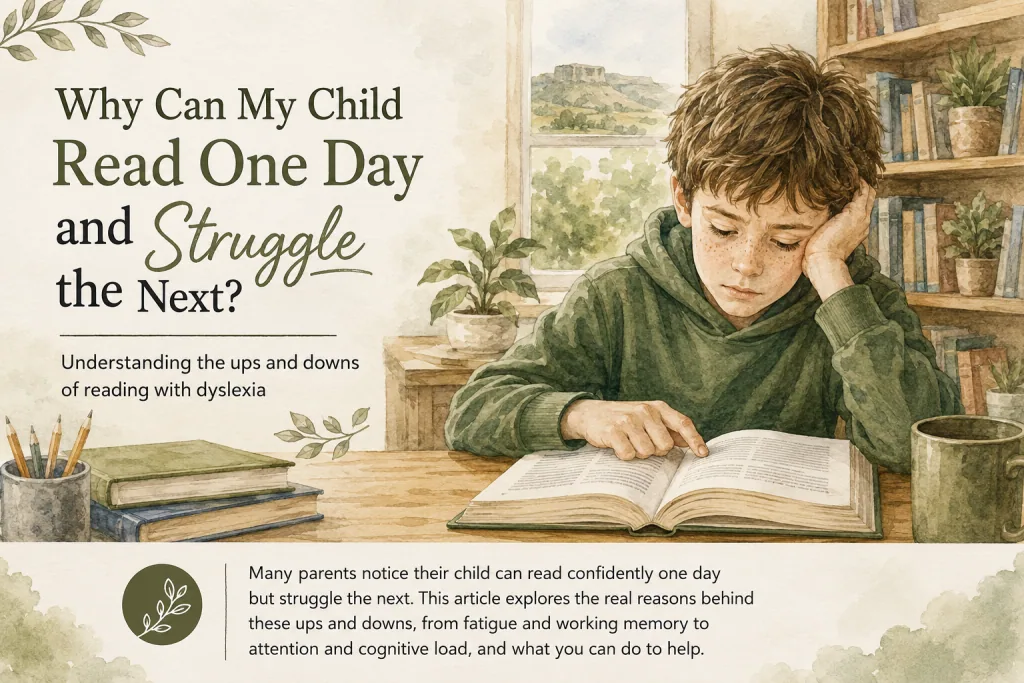
It can be confusing when a child reads a passage confidently one day, yet struggles with similar words or text the next. Parents may wonder whether their child is rushing, not…
Read the article
Getting a dyslexia diagnosis for your child is often a relief. It gives a name to something you have been noticing for a long time, and it opens the door to proper support. However, many…
Read the article
If your child goes quiet when the teacher asks the class to read aloud, you are not imagining it. For many children with dyslexia, reading aloud is one of the most difficult and exposed…
Read the article
If your child is being assessed for dyslexia, or if you are exploring why they are finding learning harder than expected, you may have come across the term cognitive assessment. It can…
Read the article
For many families living with dyslexia, homework is one of the most challenging parts of the day. What should take twenty minutes can stretch into an hour or more, ending in tears,…
Read the article
Of all the challenges that come with dyslexia, the impact on a child's self-esteem is perhaps the one that worries parents most deeply. Watching your child conclude that they are not…
Read the article
It is one of the most confusing and isolating experiences a parent can have. You know something is not quite right. You have raised your concerns with school. A screener has been carried…
Read the article
If you've started looking into getting your child assessed for dyslexia, you may have come across the term Educational Psychologist (or EP) and wondered whether that's what you actually…
Read the article
If your child has dyslexia (or you suspect they might) you may already have noticed something beyond the reading and spelling difficulties. A reluctance to try. A child who says…
Read the article
You've been called in again. The school says your child is being disruptive, refuses to engage, and isn't trying hard enough. But something doesn't add up. At home, you see a curious,…
Read the article
As a parent, noticing that your child is struggling can be worrying and at times, isolating. You may have spent weeks or months observing difficulties at home, wondering whether to raise…
Read the article
If you've noticed that your child is struggling with reading, writing, or spelling despite working hard and receiving support, you may be wondering whether dyslexia could be a factor.…
Read the article
If you've found yourself searching for answers about your child's reading, writing, or spelling difficulties, you're not alone. Many parents reach a point where they know something isn't…
Read the articleOther topics